
Where to Put Your Glasses When You Take Them Off: A Magnetic Holder Guide
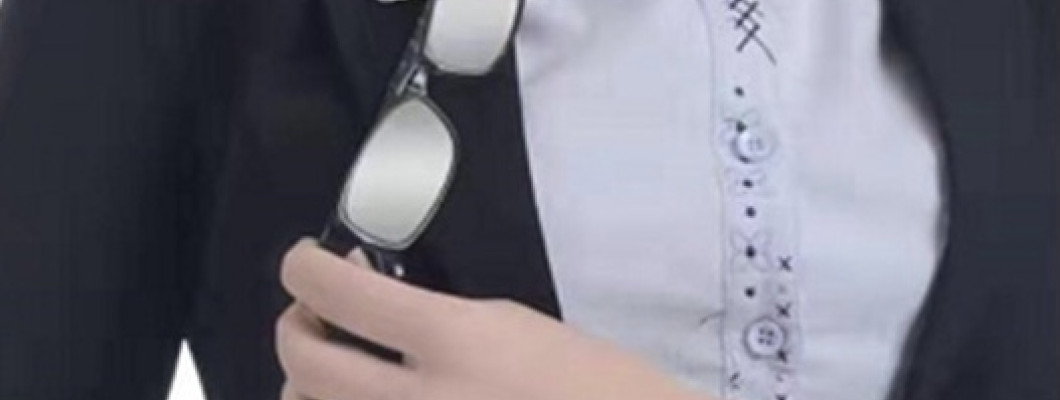
Where to Put Your Glasses When You Take Them Off: A Magnetic Holder Guide
You take off your glasses to answer a call, leave your desk, or switch to another task. A few minutes later, you cannot remember whether you placed them beside the keyboard, inside a pocket, or on the table in another room.
The difficulty often starts during a brief interruption. Your glasses need a temporary location, but you have not decided what that location should be.
A magnetic glasses holder can provide a hanging point in suitable circumstances. Its usefulness depends on your frame, clothing, placement, and everyday movements. It also works best alongside a clear routine for returning glasses to their case when temporary hanging is no longer appropriate.
This guide explains how to assess that need, check product information, and create a practical arrangement without assuming universal compatibility or guaranteed protection against loss.
Quick Answer
Give your glasses a consistent temporary location whenever you remove them. If you choose a magnetic holder, confirm that the attachment and hanging section suit your clothing and frame, then check the arrangement carefully before relying on it. Keep a suitable glasses case available for storage and transport, and observe precautions relevant to magnets.
Contents
Identify when your glasses lose their place.
Choose one purpose for the holder.
Separate temporary hanging from storage.
Review the verified product details.
Choose clothing and a practical position.
Set up and check the arrangement.
Consider other accessories carefully.
Apply the routine at home, work, and while traveling.
Follow relevant magnet precautions.
Avoid common mistakes.
Use the checklist and ten FAQs.
Start with a simple daily routine.
Identify the Moment That Causes the Search
Think about the last time you looked for your glasses. What happened immediately before you removed them?
You may notice a pattern: a phone call interrupted your reading, someone entered the room, or you stood up to collect something. The place you chose was convenient for that moment but unrelated to any established routine.
Focus on that transition. A temporary location works best when it belongs to a recognizable action, such as pausing a reading session.
You do not need to reorganize every room. Start with the situation that occurs most often and decide what you will do with your glasses during that interruption.
Choose One Clear Purpose
A product described as multi-purpose can invite you to attach several belongings at once. Before doing that, identify the one item you most want to organize.
For example, your primary need may be a temporary place for reading glasses during desk work. That is different from displaying an employee badge or managing wired earphones.
Choose the initial purpose and evaluate the arrangement against it. Additional uses can be considered separately if they are appropriate.
This keeps the decision manageable. Instead of asking whether the holder can organize your entire day, you can ask whether it makes one recurring task easier without creating another inconvenience.
Separate Hanging from Protective Storage
Temporary hanging and storage serve different needs. Hanging keeps an item in an accessible position during a suitable activity. A case provides a dedicated place when you put the glasses away, according to its design and instructions.
Think about what happens next. Will you put the glasses back on shortly, or place them inside a bag containing other objects?
A clear transition rule helps. You might use a suitable temporary location during a reading session, then return the glasses to their case when that session ends.
Do not expect one arrangement to suit every stage of the day. Knowing when to change methods is part of keeping belongings organized.
The Magnetic Holder Available from K&M Shopping
K&M Shopping lists a magnetic accessory holder for compatible clothing or bags, intended for glasses and selected small accessories.
The published dimensions are 43 × 23 × 11 mm, and the stated weight is 30 g. Listed materials are stainless steel, magnet, and acrylic. Silver and black are shown as color options.
Product details:
https://k-m.store/shop/en/mobile-accessories/magnetic-accessory-holder
A numerical load capacity is not provided. The holder’s own weight is not a carrying limit, and descriptions of magnetic strength should not be converted into an assumed performance rating.
Use these details as a starting point, then clarify anything essential to your intended setup.
Read Dimensions as Dimensions
A compact external size does not tell you everything about the hanging section. Your frame still needs an appropriate way to rest without being forced into position.
Use a ruler to understand the approximate space the holder will occupy. Then consider the size and shape of the actual accessory you want to hang.
Do not estimate an internal opening from a photograph. Camera angles and differences between photographed objects can make visual comparisons unreliable.
If a particular frame feature affects your decision, describe it to the retailer. A question about your actual glasses is more useful than asking whether the product suits “normal glasses.”
Start with Familiar Clothing
Choose clothing you wear regularly when you expect to use the holder. A successful check on one garment does not automatically establish the same result on every other fabric.
Look at the proposed area for folds, seams, decorative details, and changes in thickness. Consider the garment in its normal worn position rather than only when laid flat.
Follow the product and garment guidance, especially with delicate materials. Do not begin by assuming that magnetic attachment guarantees no visible effect.
If the garment pulls, changes shape unacceptably, or does not support the arrangement as intended, stop using that position. A practical setup should not require you to ignore an obvious mismatch.
Choose a Position Around Your Movements
A location can look convenient while standing still and become awkward when you sit down, reach forward, or put on a bag.
Think through the movements associated with the task. At a desk, consider the desk edge and arm movement. When leaving a room, consider jacket layers and shoulder straps.
Avoid selecting a position solely because it is easy to see in a mirror. The arrangement needs to work during ordinary use.
If you find yourself repeatedly adjusting it, reconsider the position or the method. Constant attention to the holder can defeat the purpose of giving your glasses a predictable place.
Consider a Bag Attachment Separately
Using the holder with a bag introduces a different set of movements. The bag may be placed on a chair, carried against your body, opened, or moved beside other belongings.
Review where the attached item would be during each of those actions. A position that is convenient while the bag rests beside you may be unsuitable when you start carrying it.
Do not automatically treat external hanging as appropriate storage for the whole journey. Decide when the item should return to its case.
If your goal is accessibility while seated with the bag nearby, keep the routine specific to that situation rather than extending it to every use of the bag.
Attach and Check Before Adding the Item
The product instructions describe placing the front section outside the fabric and the matching magnetic section behind it. Check the attachment before adding one suitable lightweight item.
For glasses, the listed method is to place one temple arm through the hanging section after checking the grip.
Carry out the first check in a calm setting over a clear surface. Observe placement and removal without pulling abruptly or forcing the frame.
A careful trial helps identify obvious fit problems. It does not establish suitability for running, sports, or every movement you may perform later.
Check Contact Around the Glasses
Look beyond the attachment itself. Nearby jewelry, a bag strap, a zip, or another object may affect the arrangement even when the holder is positioned correctly.
Check how the glasses rest and whether the frame needs to be twisted or squeezed to use the hanging point. If it does, pause and clarify compatibility.
Think about removal too. You should understand the intended motion rather than relying on a sharp tug.
If the setup repeatedly catches or interferes with an ordinary action, do not accept that as something you must learn to tolerate. Reconsider the position or choose a more suitable storage method.
Build a Routine for Two Pairs
If you alternate between reading glasses and sunglasses, decide where each pair belongs during the change.
Avoid creating an arrangement where both pairs compete for the same temporary location. Keep the appropriate case accessible so that switching does not require searching through a crowded bag.
You might designate one location for the pair currently in use and a separate case for the other. The useful detail is the distinction, not a particular universal layout.
Review the routine when your activities change. A method that works during a seated reading session may need adjustment before leaving home or handling luggage.
Evaluate Earphones by Their Actual Design
“Earphones” describes several different products. Wired earphones, wireless earbuds, and larger headphones have different shapes and storage requirements.
Define what you want to organize. If it is a cable, ask how the intended arrangement should be used without tension on sensitive connections. Follow the earphone manufacturer’s handling guidance.
For wireless earbuds, do not assume that a general accessory holder replaces their designated storage or charging case.
The same principle applies to other small items: identify the exact task, then confirm compatibility. A broad product category is not enough information to establish a suitable arrangement for every device within it.
Consider Badges and Keys Carefully
A work badge needs to meet the requirements of the place where it is used. Visibility, orientation, and the permitted attachment method may all matter.
Check your employer’s guidance and the card manufacturer’s instructions where relevant. Do not assume every card uses the same technology or has identical restrictions around magnets.
With keys, distinguish one small item from a substantial collection of keys, fobs, and tools. There is no published load rating that allows you to calculate a safe allowance.
Treat each additional use as a separate decision. Success with one accessory does not prove that every other object belongs on the holder.
Example: Reading at Home
Choose your usual reading location and notice what happens when you pause. Perhaps you place the glasses on the book, then carry the book elsewhere and forget the glasses.
Create a clear alternative for that brief pause, using a suitable temporary arrangement. When you finish reading, return the glasses to their case or another appropriate designated location.
Practice the same sequence for several sessions. The accessory is only part of the change; repeating the sequence makes the location predictable.
If you continue placing the glasses on unrelated surfaces, review the transition itself. You may need a more convenient case location rather than another accessory.
Example: Moving Between Meetings
At work, glasses may be removed during conversation and needed again for a document. Prepare your temporary arrangement before the meeting rather than deciding where to place them each time.
Before leaving, review what changes: putting on a jacket, lifting a bag, or carrying several items. Return the glasses to an appropriate location before a movement that makes the current setup unsuitable.
A short departure check can include glasses, badge, and phone. Keep it simple enough to repeat.
This connects organization to a recognizable event—leaving the room—without requiring constant checking throughout the meeting.
Example: Traveling with Several Bags
Travel creates frequent transitions between waiting, walking, sitting, and handling luggage. A temporary location may be useful during one stage and inconvenient during another.
Plan when you will put the glasses away. For example, prepare them for appropriate storage before changing clothing layers or handling luggage that crosses the attachment area.
Do not treat the holder as a tracking device. If you leave the garment or bag behind, it cannot tell you where your glasses are.
Keep important belongings under your supervision and use a consistent packing routine. The accessory supports a limited task within that routine.
Magnets and Implanted Medical Devices
Magnets can interfere with some implanted medical devices. The American Heart Association advises people with pacemakers or implantable cardioverter-defibrillators to keep magnets at least six inches, approximately 15 cm, from the implant site.
That general guidance is not a product-specific compatibility assessment. Do not place this holder near an implanted device, and consult your healthcare team and device instructions before choosing a magnetic accessory.
If another medical device you use includes magnet precautions, follow its own guidance. Do not assume that small size means a magnetic product is suitable for every person.
Common Mistakes to Avoid
Expecting the holder to prevent loss automatically
A consistent routine still matters. Moving the holder unpredictably between garments and bags can make its location harder to remember.
Adding several items at once
Start with the intended task. More contents introduce additional fit and handling questions without a published load rating.
Ignoring a change of clothing
Reassess the arrangement when the fabric or layering changes. An earlier check does not cover every garment.
Using the holder in situations it was not assessed for
Ordinary temporary hanging does not establish suitability for vigorous activity or demanding environments.
Leaving storage decisions until the last moment
Keep the appropriate case accessible. Otherwise, you may revert to whichever surface happens to be nearby.
Care and Storage Between Uses
The listing recommends a soft dry or slightly damp cloth, followed by drying, and advises against immersion or harsh chemicals.
Remove the accessory before laundering clothing unless explicit instructions confirm otherwise. Keep its components together in a designated place.
Inspect it before use and stop if a component is loose or damaged. Keep small magnetic parts away from children and pets.
Choose a storage location that also respects any magnet-related precautions for nearby objects. A consistent place makes preparation easier the next time you need the holder.
Review the Routine After a Week
Ask whether the original problem has improved. Do you know where the glasses are during the relevant task? Is removal straightforward? Are you still adjusting the arrangement repeatedly?
If it works, keep the setup focused. You do not need to add extra uses simply because the product offers them.
If it does not, identify the reason. The position, garment, frame compatibility, or choice between hanging and case storage may need reconsideration.
For other organization accessories, explore K&M Shopping:
https://k-m.store/
Browse with a specific need in mind. The right choice is the one that fits your belongings and routine.
Before-Use Checklist
Identify one accessory and one recurring task.
Read the confirmed product information.
Clarify important compatibility questions.
Choose suitable clothing or a bag location.
Understand attachment and removal.
Check the arrangement calmly before relying on it.
Review nearby contact points and ordinary movements.
Keep the appropriate storage case accessible.
Observe relevant magnet precautions.
Assign the holder a place when not in use.
Quick Answers
Best starting point: The moment when you normally remove and misplace your glasses.
Main purpose: A suitable temporary hanging location.
What it does not establish: Guaranteed protection from loss, drops, or scratches.
Most important unknown: No numerical carrying capacity is published.
When to change methods: Whenever the next activity calls for more appropriate storage.
Frequently Asked Questions
Does a magnetic glasses holder work with every frame?
Do not assume universal compatibility. Frame shape and the way the temple arm fits the hanging section matter. Avoid forcing the glasses into position or accepting an arrangement that creates unwanted pressure.
Do the glasses need to be metal?
The magnet is used to attach the holder through suitable fabric. Follow the instructed method for hanging the glasses rather than assuming the frame itself must be magnetically attracted.
Can it replace a glasses case?
It serves a different purpose. Temporary hanging may suit selected moments, while a case provides designated storage according to its design. Choose the method appropriate to what you will do next.
Does the product weight indicate how much it can carry?
No. Its own weight describes the accessory, not a load allowance. A numerical carrying capacity is not stated, so do not derive one from its dimensions or material description.
Can it mark clothing?
Compatibility with every fabric is not guaranteed. Follow garment and product guidance, check carefully, and stop using a location if the fabric shows an unacceptable effect. Magnetic attachment does not eliminate the need for assessment.
Is it suitable for all kinds of earphones?
No blanket assumption is appropriate. Identify the exact earphone design and the part you want to organize. Follow the device manufacturer’s handling instructions and avoid placing strain on cables or connections.
Can I hang a phone from it?
A phone is not among the confirmed intended hanging uses described here. Do not extend suitability for small accessories into an assumption that it can support a larger device.
Can I use it for sports?
Suitability for running or vigorous exercise is not established by an ordinary fit check. Choose equipment intended for that activity rather than treating a temporary accessory holder as a sports retention system.
What if I have a pacemaker or another implanted device?
Follow your device’s magnet precautions and consult your healthcare team before use. Keep magnets away from the implant site; general distance guidance is not proof that this particular product suits your circumstances.
How do I judge whether it is useful for me?
Assess the task you chose at the beginning. If your glasses have a predictable location and handling is suitable without repeated adjustment, the routine may help. Otherwise, reconsider the placement or storage approach.
Step-by-Step: Start with One Daily Task
Step 1: Identify when you usually remove your glasses.
Step 2: Decide whether that moment calls for temporary hanging or case storage.
Step 3: Review product information and resolve essential unknowns.
Step 4: Choose a suitable location and follow the attachment instructions.
Step 5: Check the arrangement with ordinary, gentle movements.
Step 6: Define when the glasses return to their case.
Step 7: Remove and store the holder when its use is finished.
Step 8: Review the routine after several uses.
Conclusion
Knowing where your glasses are begins with a repeatable decision when you take them off. A suitable magnetic holder can support that decision during selected activities, while a case remains part of the wider storage routine.
Choose a clear purpose, check compatibility, and keep the arrangement appropriate to your next task.
Quick Summary
Give frequently used glasses a predictable temporary location.
Distinguish hanging from protective storage.
Check the actual frame, fabric, and surrounding contact points.
Avoid assuming unspecified performance or capacity.
Follow magnet precautions where relevant.
Keep a clear end-of-use routine.
Read Also
If organizing everyday belongings also means deciding where they go when you return home, explore the small-entryway storage guide:
https://k-m.store/shop/en/small-entryway-clothes-rack-shoe-storage-guide
Leave a Comment