
UV Flashlight Multi-Purpose Detector
From the same category


Description
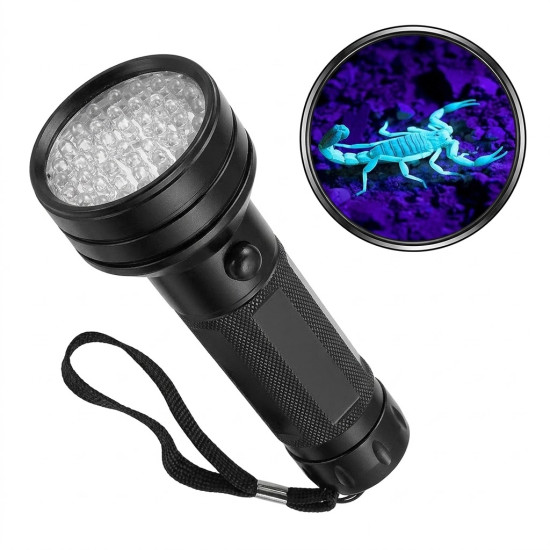
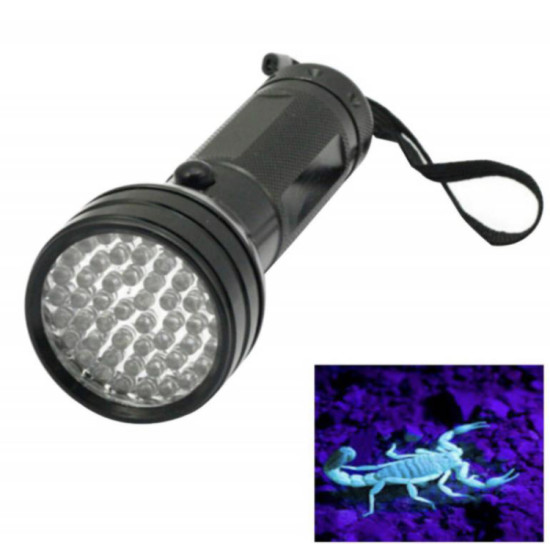
The Portable UV Inspection Flashlight helps reveal selected marks and materials that fluoresce or become more visible under ultraviolet light than under ordinary lighting. Powered by AAA batteries, it can be used for preliminary visual inspection at home, in a vehicle or while travelling.
Some inks, fibres, dried residues, minerals and organisms react to ultraviolet light by producing a visible glow. The flashlight helps scan an area and identify locations that may require further inspection or cleaning, particularly in a dark or dimly lit room.
The problem: Certain fluorescent traces and markings can be difficult to see under normal household lighting.
The solution: Slowly scan the surface with UV light in low ambient lighting, observe any glow or visual change and then verify it using the appropriate method.
- Ultraviolet illumination for preliminary visual inspection.
- Helps reveal selected UV-reactive marks, stains and materials.
- Compact and lightweight design for bags, vehicles and travel.
- Powered by AAA batteries without requiring a wall outlet during use.
- Suitable for household, travel and simple field-inspection tasks.
- Straightforward operation for scanning surfaces and objects.
- Fluorescent reactions are usually easier to observe in low light.
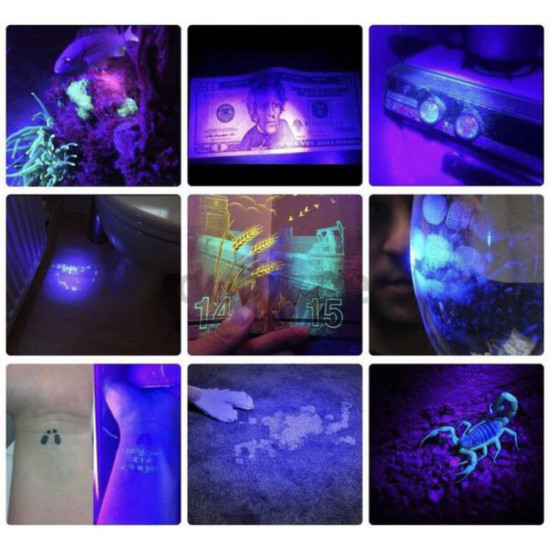
- Searching for selected dried residues and fluorescent traces on floors or carpets.
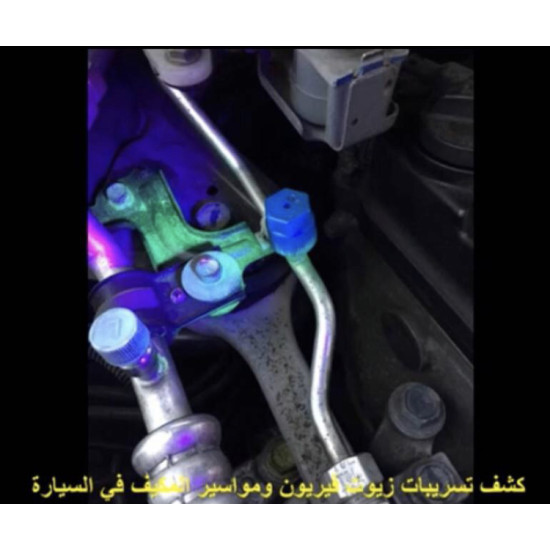
- Inspecting household, hotel-room or vehicle surfaces.
- Viewing selected UV-reactive security marks on banknotes and documents.
- Examining invisible inks, fluorescent dyes and UV-reactive materials.
- Viewing selected fluorescent minerals and stones.
- Helping locate certain fluorescent organisms, including some scorpions, from a safe distance.
- Install AAA batteries according to the polarity marked in the battery compartment.
- Switch off or reduce surrounding light for better contrast.
- Aim the flashlight only at the surface and away from eyes, skin, people and animals.
- Begin at a moderate distance and move the beam slowly across the area.
- Observe any glow or colour change and move closer only when necessary.
- Mark or photograph the location before restoring normal lighting.
- Switch the flashlight off and inspect or clean the area appropriately.
- Use the flashlight in the darkest practical environment.
- Remove loose surface dust that may create unnecessary reflections.
- Test a small known area first to understand the appearance of fluorescence.
- Move the beam slowly and inspect from different angles.
- Remember that cleaners, fibres and unrelated substances may fluoresce similarly.
- Install fresh batteries if the UV output becomes weak.
It provides a portable way to perform an initial visual inspection without large equipment or direct electrical power. It is useful for household and travel applications, provided that fluorescent reactions are interpreted cautiously and are not treated as conclusive identification.
Before: A surface may appear normal under ordinary lighting, making selected traces difficult to locate.
After: Fluorescent areas may become visible for further cleaning or examination, without conclusively identifying what produced the glow.
- Wipe the flashlight body with a soft, dry cloth.
- Do not immerse it in water, as water resistance is not specified.
- Remove the batteries before long-term storage to reduce leakage risk.
- Do not mix old and new batteries or different battery types.
- Replace all batteries together if the output becomes weak.
- Store in a dry location away from heat and direct sunlight.
- Home and pet owners performing preliminary stain inspection.
- Travellers inspecting selected accommodation surfaces.
- Collectors of fluorescent stones and minerals.
- Users checking selected UV-reactive security features.
- Household, vehicle and travel use with appropriate safety precautions.
- You require a certified banknote or document authentication device.
- You need laboratory analysis capable of identifying a liquid or substance.
- You need medical equipment for examining skin or diagnosing infection.
- You require a specified wavelength such as 365 or 395 nm.
- You require confirmed waterproofing or USB rechargeability.
| Property | Details |
|---|---|
| Product type | Portable ultraviolet inspection flashlight |
| Light type | UV ultraviolet light |
| Power source | AAA batteries |
| Number of batteries | Not specified |
| Batteries included | Not specified |
| Wavelength | Not specified by the supplier |
| LED count | Not specified |
| Dimensions and weight | Not specified |
| Material | Not specified |
| Water resistance | Not specified |
| Use environment | Home, vehicle, travel and general visual inspection |
| Package contents | Portable UV flashlight; battery inclusion is not confirmed |
- Never shine the UV beam directly into anyone’s eyes, even briefly.
- Do not aim it at people or animals and do not use it as a toy.
- Avoid viewing reflections from mirrors or polished metal surfaces.
- Limit skin exposure and never use the flashlight for skin examination or medical purposes.
- Do not use it to diagnose fungal infections, diseases or skin conditions.
- A visible glow does not identify a substance, and no glow does not prove that a surface is clean.
- Do not rely on the flashlight alone to authenticate currency or official documents.
- If a scorpion or dangerous insect is located, maintain a safe distance and contact a professional when necessary.
- Keep out of reach of children; this product is not a toy.
- Dispose of batteries properly and keep them away from fire and excessive heat.
Will it detect every type of stain?
No. Some materials fluoresce under UV while others do not, and unrelated substances may produce a similar glow.
Can it identify pet urine stains?
It may reveal selected dried residues, but cleaners, fibres and other materials may also fluoresce. The result is not conclusive identification.
Can it confirm that a banknote is genuine?
No. It may display selected UV-reactive security features, but authenticity must be assessed using all relevant features or a specialist device.
Can it detect bed bugs?
It should not be relied upon to confirm bed bugs. Proper visual inspection and professional pest-control assessment may be required.
Can it be used to search for scorpions?
Some scorpions may fluoresce under UV. Always inspect from a safe distance and never approach or touch the animal.
What is the flashlight’s wavelength?
The wavelength is not listed, so 365 or 395 nm compatibility cannot be confirmed.
How many AAA batteries are required?
The battery type is specified, but the required number is not stated. Check the battery compartment or packaging.
Are batteries included?
This is not stated and they may need to be purchased separately.
Does it work better in darkness?
Yes. Reduced ambient lighting generally makes fluorescence and contrast easier to observe.
Can it be used to examine skin?
No. It is not medical diagnostic equipment, and direct exposure of the eyes and skin should be avoided.
Read the ultimate travel packing guide when selecting practical inspection and travel accessories.