
How to Keep Floors Tidy Between Mopping: A Practical Guide to Microfiber Cleaning Slippers
How to Keep Floors Tidy Between Mopping: A Practical Guide to Microfiber Cleaning Slippers
A few strands of hair beside the dressing table or a light scattering of dust in the hallway do not always call for cleaning the entire floor. Yet leaving every small mess until the next full cleaning session can make the room feel less comfortable to use.
The useful middle ground is a short, specific maintenance task. Identify what needs attention, choose an appropriate tool and stop when that task is complete.
Microfiber cleaning slippers are one option for collecting loose dust and hair. They work best as part of a deliberate routine, with attention to fit, floor compatibility and the condition of the covers themselves.
This guide explains how to decide whether they suit a particular task, how to organise a first trial and when another cleaning method makes more sense.
Quick answer
Use microfiber cleaning slippers for suitable light floor-maintenance tasks, starting with a small, dry, level area. Check that the covers fit securely and that the route is clear before moving carefully.
Do not treat them as all-day footwear, assume slip resistance or use them on stairs, heavily wet floors or sharp debris. They supplement a cleaning routine rather than replace mopping, stain removal or tasks requiring another method.
Contents
Identify the mess before choosing the tool
Separate quick maintenance from a full clean
Understand the product and check fit
Plan a small first trial
Decide whether to continue or change tools
Apply the routine in different rooms
Organise washing, drying and storage
Review results without overcomplicating the task
Checklist and quick answers
Frequently asked questions
Identify the mess before reaching for a tool
Look at the area that needs attention.
Loose hair, fine dust, food fragments, sticky marks and spilled liquid are different problems. They should not automatically become one task simply because they occupy the same floor.
Choose the method according to what is present. If you cannot identify the debris clearly, investigate before walking over it.
This brief assessment prevents a small maintenance job from turning into an attempt to handle everything with the tool already in your hand—or on your feet.
Separate maintenance from a full cleaning session
A maintenance task has a narrow purpose, such as collecting visible hair from an accessible patch of bedroom floor.
A full cleaning session may involve moving items, reaching edges, treating marks and following the floor’s broader care routine.
Keep both roles clear. Quick maintenance can address a local need without requiring you to clean every room. It should not become a reason to postpone areas that need more direct attention.
Decide what you are doing now and what requires a separate method later.
Define what “finished” means
Before starting, identify the result you want.
“Remove the loose hair near the dressing area” is more useful than “make the room spotless”. The first task has a clear boundary; the second can expand indefinitely.
Afterwards, inspect the target area and decide whether the original problem remains. If it does, consider whether the tool or access was unsuitable.
A defined endpoint makes short cleaning jobs easier to complete and helps you judge the accessory fairly.
What microfiber cleaning slippers are
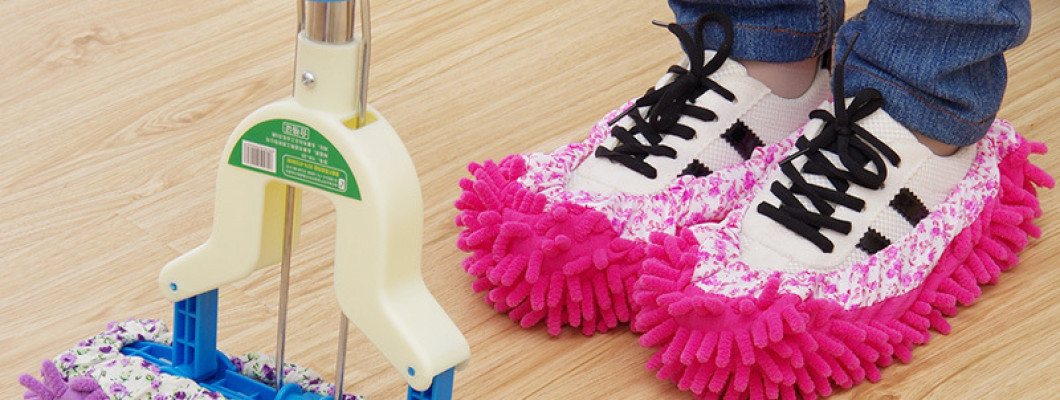
These are cleaning covers worn on the feet for light floor care. They are intended to help gather loose material during careful movement.
Their role is different from ordinary indoor footwear. Wearing them does not make every household activity a cleaning opportunity.
Check the product’s directions and fit before use. If you need to alter your movement continually to keep the covers in place, stop and reassess.
The practical question is whether the accessory makes the chosen task manageable, not whether you can learn to tolerate an awkward fit.
A relevant option from K&M Shopping
K&M Shopping lists Microfiber Dust & Cleaning Socks for Floor Cleaning. The page describes washable, reusable microfiber covers for loose dust, light dirt and hair, with dry or slightly damp use.
Exact dimensions, a machine-washing programme and slip resistance are not confirmed. A mop appearing in a demonstration image should not be assumed to be included.
Product details:
https://k-m.store/shop/en/microfiber-dusting-cleaning-slippers
Confirm any fit or package-content information that matters to your purchase before ordering.
Check the fit before covering a room
Put the covers on in a stable position and inspect how they sit.
Look for loose sections that interfere with movement or a fit that requires repeated adjustment. Follow the supplied wearing instructions rather than assuming a demonstration photograph applies to every foot or shoe.
If the covers feel insecure, remove them and use another tool. A handheld or long-handled cleaning method may suit you better.
A product being flexible does not establish universal fit.
Check the floor’s care requirements
The general name of a floor does not necessarily describe its finish or care requirements.
Refer to the flooring instructions, particularly before introducing moisture or cleaning products. A soft textile alone does not establish that every method used with it will suit every surface.
If those instructions are unavailable, avoid experimenting with unfamiliar chemicals or a new wet-cleaning routine.
Separate two questions: whether the accessory is appropriate, and whether the proposed cleaning method is suitable for the particular floor.
Choose a small, dry first task
Start with an accessible area that is level, dry and free of obstacles.
Select a limited amount of suitable loose material rather than attempting several rooms immediately. This makes it easier to assess fit, control and the result.
After the trial, ask whether the covers stayed in place and whether they addressed the intended mess.
There is no need to expand the task merely because you have put them on. A useful first trial can remain small.
Prepare the route before wearing the covers
Move toys, loose cables and other obstacles out of the cleaning area using an appropriate method.
Do not plan to push them aside with your feet while working.
Choose where the task starts and ends, including a suitable place to remove the covers. This avoids continuing through other spaces simply to reach wherever cleaning supplies are stored.
A clear route allows you to focus on the task instead of repeatedly changing direction around objects.
Give the task your attention
Avoid combining the first trial with carrying shopping, hot drinks or objects that block your view of the floor.
If another household job interrupts, remove the covers before switching activities.
The appeal of a wearable cleaning accessory does not require doing several things simultaneously. A short, deliberate task is easier to assess than incidental movement while distracted.
Choose a time when the area is quiet enough to work without stepping around people or pets.
Move carefully rather than trying to cover ground quickly
Do not turn the task into sliding, running or a game.
If a mark needs repeated pressure or scrubbing, stop and choose a tool that gives you suitable control over that job.
Likewise, do not stretch a foot far beneath furniture in an unstable position. A low gap may be better reached with an appropriate long-handled tool.
The objective is collecting suitable loose debris in an accessible area, not reaching every part of the room using your feet.
Check the covers as well as the floor
Pause when necessary to inspect what has collected on the cleaning surface.
If the covers are dirty or contain something unsuitable, end the task and address that before further use. Do not continue simply because one section remains unfinished.
Looking only at the floor can miss the condition of the tool doing the work.
Build this check into the routine so that deciding to stop is straightforward rather than something postponed until the entire home has been covered.
Treat room changes as a new decision
Moving from a bedroom to a kitchen may involve a change in debris, floor conditions or cleaning requirements.
Do not assume the same method remains appropriate across every doorway. Reassess the next area and the condition of the covers before continuing.
A small bedroom task does not need to become a whole-home circuit.
Keeping the scope limited also makes cleanup easier: you know what the covers have been used for and can move them directly into the appropriate care routine.
Know when to choose a broom, vacuum or mop
A larger accumulation, debris in tight corners or material beneath furniture may be more manageable with another suitable tool.
Sticky residues need a method appropriate to both the mark and the floor. Large particles and unknown debris deserve a separate assessment.
Do not measure the slippers’ usefulness by how many other tools they replace. An accessory can be worthwhile for a narrow task without becoming the main cleaning method.
Choose for access and control, not loyalty to one product.
Consider damp use separately
Slightly damp use is a different decision from dry dust collection.
First establish that it is permitted by the flooring and product instructions. Do not soak the covers or use them as a response to a large spill.
If moisture makes movement uncomfortable or uncertain, stop and choose another method.
There is no need to use water simply because an accessory allows some damp use. When the task is loose dry hair or dust, start by considering the appropriate dry approach.
Do not add cleaner automatically
Washability does not establish compatibility with every detergent, disinfectant or homemade mixture.
Follow the relevant instructions for the floor and textile. Avoid adding an unfamiliar product just to make the task feel more thorough.
A strong smell is not a measure of cleaning success, and using a cleaning cover does not establish a disinfecting result.
Match the treatment to a real need. For a small amount of suitable loose material, additional chemicals may not be part of the task at all.
Example: hair near a dressing area
Inspect the area before starting, especially for hairpins, small accessories or other items that should not be collected underfoot.
Remove those separately, then assess the remaining loose hair.
Keep the task within the accessible area rather than trying to reach behind every piece of furniture. Afterwards, inspect from another angle and decide whether the targeted material has been collected.
Remove the covers for care rather than leaving them on while continuing with unrelated household activities.
Example: loose pet hair
An accessible patch of loose pet hair may be a suitable maintenance task, depending on the floor and product instructions.
Separate that from pet waste, food spills or other material requiring a different cleaning method.
Move toys out of the route and choose a time when the animal is not crossing around your feet.
Keep expectations specific: gathering visible loose hair is the task. Do not infer allergy relief, hygiene guarantees or other health outcomes from the product’s cleaning role.
Example: a repeatedly dusty hallway
If the same patch needs attention frequently, examine the surrounding routine as well as the cleaning method.
Notice where shoes are stored, where belongings are placed and which areas people pass through. You may identify an organisational change worth making.
Do not assume repeated cleaning alone addresses the source of every problem.
Use local maintenance when appropriate, then review whether the entrance arrangement or another cleaning task needs attention. The best routine considers why the work keeps returning.
Example: after tidying a bedroom
Rearranging clothing or bedding may leave a small amount of loose material on an exposed floor area.
Finish clearing objects from the route before choosing the cleaning method. Check what is actually present rather than assuming every post-tidying task is light dust collection.
If moving furniture has revealed accumulated debris, use the tool suited to that larger job.
A quick task should remain quick because its scope is limited, not because you overlook work that needs a different approach.
Visible tidiness is not disinfection
Assess the result using accurate language.
You can observe that loose hair has been gathered or that a particular area looks clearer. Those observations do not establish that the surface has been disinfected.
No disinfecting performance is confirmed for this product.
If a situation calls for a specific cleaning or hygiene procedure, follow the appropriate guidance for that situation. Do not substitute a visible improvement for a result the accessory has not been shown to provide.
Plan removal and washing
Choose a suitable endpoint where you can remove the covers without continuing across unrelated areas.
Follow the care label for washing. The product page does not provide a specific temperature or machine cycle, so obtain the instructions rather than borrowing settings from another textile.
Do not assume that a similar-looking mop head has identical care requirements.
Keep washing as part of the task itself. A used cleaning accessory left waiting indefinitely makes the next maintenance job less convenient.
Give drying its own place
Allow the covers to dry fully before storage or reuse, following their care guidance.
Keep ready-to-use items distinguishable from those waiting to be washed or dried. A simple separation is enough; it does not require an elaborate storage system.
The important point is that returning something to its usual place should mean it is ready.
Avoid a routine where an item disappears into a cupboard while still needing care, then is taken out later under the assumption that it is clean and prepared.
Do not invent a replacement schedule
Reusable does not mean a guaranteed number of washes or a fixed service life.
Check condition and fit rather than relying on an unsupported replacement interval. If the covers become damaged or no longer sit securely, stop using them and reassess.
Keep expectations based on the information available.
You do not need a precise lifespan claim to make a practical decision about whether an accessory remains suitable for its intended task.
Review usefulness during ordinary cleaning
During your regular cleaning-supply check, consider where the covers have genuinely helped.
Which tasks were straightforward? Which required another tool? Was washing and drying easy to fit into your routine?
A short note can reveal whether the accessory has a useful role. There is no need to invent time-saving percentages or compare every cleaning session.
Keep the tasks that work and simplify those that do not. A routine should fit the household, not require the household to justify every purchased tool.
Reassess after room changes
Moving furniture, adding a rug or changing how a room is used can alter the cleaning route.
Recheck access rather than assuming the old path still works. A previously open area may now contain obstacles or transitions that make another method preferable.
Reassess fit if someone else will use the covers as well.
A successful earlier trial applies to that situation. It does not establish suitability for every room, user or future arrangement.
Common mistakes
Wearing the covers throughout the day.
Starting without checking the floor.
Continuing with dirty cleaning surfaces.
Moving between different tasks without reassessment.
Expecting difficult stains to respond to light dusting.
Reaching awkwardly beneath furniture.
Assuming universal fit or slip resistance.
Inferring accessories from a demonstration photograph.
Before-use checklist
Identify the target mess.
Check flooring compatibility.
Remove obstacles and unsuitable debris.
Inspect the clean, dry covers.
Confirm secure fit.
Select a level, clear route.
Start with a limited task.
Stop if movement becomes uncomfortable.
Check the covers before continuing elsewhere.
Finish with appropriate washing and drying.
Quick answers
Best first task: a small, accessible dry area with suitable loose dust or hair.
When to change tools: the job requires scrubbing, spill handling or awkward reaching.
What washability does not specify: an automatic machine cycle, temperature or detergent choice.
Useful success measure: the defined task is completed comfortably and the accessory can be cared for conveniently.
Frequently asked questions
What are microfiber cleaning slippers used for?
They are intended for light floor maintenance, particularly collecting suitable loose dust and hair. They are not an all-purpose floor-cleaning system.
Do they replace a vacuum or mop?
No. Different debris, stains and access requirements may call for other tools. Keep them as a supplementary option.
Should I start dry or damp?
For suitable loose dust and hair, begin by considering dry use. Damp use requires confirmation that the floor and product instructions allow it.
Are they slip-resistant?
That feature is not confirmed. Do not rely on the covers to improve grip, and stop if you feel unstable.
Will they fit every foot size?
Exact numerical dimensions are not published. Confirm the fit and do not continue if the covers are loose or interfere with movement.
Can they collect pet hair?
The listing includes loose hair collection. Treat pet waste, spills and other debris as separate tasks requiring appropriate methods.
Can I machine-wash them?
A machine-washing programme is not specified. Follow the care label or obtain clarification before selecting a cycle.
Can I use them on stairs?
No. Use another suitable cleaning method for stairs rather than walking on them in cleaning covers.
Is the mop in the picture included?
The image does not establish package contents. Confirm the selected option and included items before ordering.
When should I stop using them?
Stop when the task changes, the covers need cleaning, the fit becomes unsuitable or movement feels uncomfortable. Choose another method when necessary.
Step by step: begin with one area
Identify a suitable task, check the floor and prepare a clear route. Inspect the covers and confirm their fit before moving carefully.
Review the result and the cleaning surface. End the task when complete or when another method is needed.
Wash according to the instructions, dry fully and store ready for an appropriate future use.
Conclusion
Keeping floors tidy between larger cleaning sessions works best when each small job has a clear purpose.
Microfiber cleaning slippers may support that routine where they fit the user, floor and task. Choose deliberately, recognise their limits and include care of the accessory in the process.
Quick summary
Start small and dry, check fit and access, and match the method to the debris. Do not assume slip resistance, disinfection or unlisted accessories. Keep the covers clean and ready, while maintaining the broader cleaning routine your home needs.
Read also
For organising belongings that collect near the entrance, explore:
https://k-m.store/shop/en/small-entryway-clothes-rack-shoe-storage-guide
For household cleaning and organisation accessories, visit K&M Shopping:
https://k-m.store/
Leave a Comment