
How to Organise Clothes in a Hotel Wardrobe: Choosing a Hanging Travel Shelf Organiser
How to Organise Clothes in a Hotel Wardrobe: Choosing a Hanging Travel Shelf Organiser
You arrive at your accommodation, open the suitcase and search for sleepwear. The next morning, you move several folded items to find a shirt. By the second evening, the original packing arrangement has become a less organised stack.
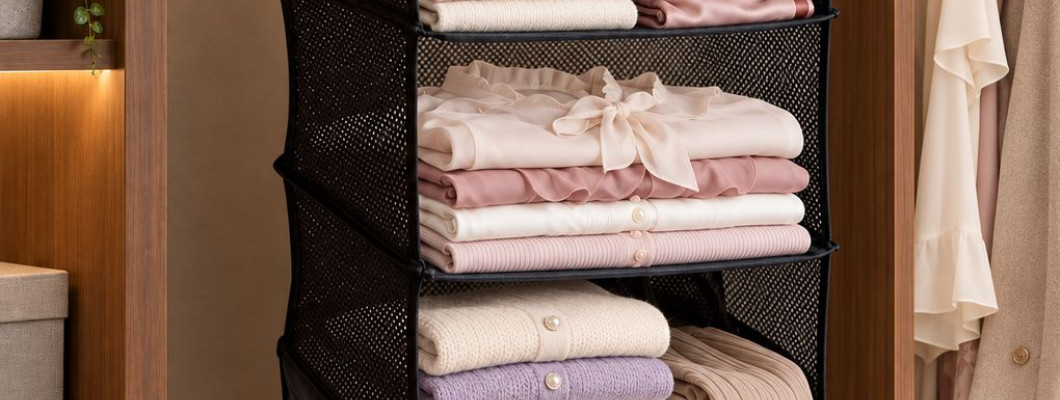
A hanging shelf organiser offers another way to manage folded clothes during a stay. Instead of keeping every category in a suitcase pile, you can assign groups to separate levels inside a suitable wardrobe.
However, additional shelves are useful only when the organiser fits the available space and has an appropriate hanging point. Its dimensions, handling instructions and intended contents matter as much as the idea of easier unpacking.
This guide explains what to check before buying, how to choose a clothing arrangement and how to manage arrival and departure without assuming universal compatibility or an unspecified carrying capacity.
Quick Answer: How Do You Use a Hanging Travel Organiser?
Choose clear clothing categories, confirm the organiser’s complete dimensions and check how it attaches to a suitable wardrobe. At your destination, inspect the hanging point before installing it and distribute appropriate lightweight contents evenly.
Follow the product’s handling instructions. For the K&M Shopping organiser, the listing says to empty the shelves before moving or removing it. Do not assume that it can be lifted fully loaded.
Keep shoes, liquids and damp clothing separate. Before departure, empty and inspect each level, then remove the organiser and check the surrounding wardrobe for anything left behind.
Contents
Decide whether hanging shelves suit your trip.
Compare hanging organisers with packing cubes.
Check dimensions and wardrobe compatibility.
Understand the product’s confirmed features.
Choose a clothing arrangement.
Plan arrival, daily use and departure.
Adapt the system for shared and family travel.
Follow care and handling instructions.
Use a practical checklist.
Read ten frequently asked questions.
Identify the Moment When Organisation Breaks Down
Before choosing another travel accessory, consider when finding clothes becomes difficult. Is it immediately after arrival, every morning or when returning unused garments to storage?
The cause may be too many clothes, several people sharing one suitcase or frequently needed items packed beneath everything else. Extra shelves do not automatically resolve those issues.
A hanging organiser is most relevant when you want visible, separate groups of folded clothing throughout a stay. If the main problem is accessing one small category inside your luggage, a separate pouch or packing cube may be sufficient.
Choose the system around the recurring difficulty rather than adding organisers without a defined purpose.
Consider the Length and Pattern of Your Stay
Several nights in one location provide more opportunity to use a wardrobe arrangement. You can establish categories and return to them throughout the stay.
Moving to a different room every day creates a different routine. Installation, emptying and repacking become more frequent, so consider whether a hanging setup offers enough benefit for that itinerary.
There is no single trip length that makes the product necessary. What matters is how you expect to access your clothes and whether suitable hanging space will be available.
Keep an alternative arrangement in mind. Travel plans and rooms can change, and your clothing should remain manageable without relying entirely on one accessory.
Separate Wardrobe Organisation from Suitcase Organisation
Packing cubes group items within luggage and allow a category to be removed independently. A hanging shelf organiser provides levels for accessing clothing inside a compatible wardrobe.
You may use both, but each should have a clear role. Adding multiple layers of containers can occupy space and introduce unnecessary transfers.
Ask what happens during an ordinary morning. Do you want to remove one outfit group from the suitcase, or see several clothing categories on shelves?
Also consider the evening routine. A useful arrangement should make returning unused clothing straightforward, not simply look orderly when first unpacked.
Understand the Limits of Two Published Measurements
The K&M Shopping organiser has stated dimensions of 40 × 28.5 cm. The available description does not provide depth or all the measurements needed to assess its fully hanging form.
Ask what each published measurement represents. If fit matters, request the overall hanging height, depth and dimensions in the state used inside luggage.
The outer measurements also do not establish the usable space on each shelf. You cannot reliably translate them into a guaranteed number of outfits or days of clothing.
Resolve the dimensions relevant to your trip before ordering rather than discovering at the destination that the organiser needs more clearance than expected.
Check the Suitcase’s Usable Interior
Measure the space available inside your suitcase, taking account of its compartments, lining and internal projections. The suitcase’s external size does not describe every part of its usable interior.
Consider the other belongings that must travel alongside the organiser. Shoes, toiletries and clothing stored elsewhere still need space.
A fit assessment made with an otherwise empty suitcase may not reflect the final arrangement. Plan the essential contents together and avoid relying on force to close the luggage.
The organiser is not described as a compression or vacuum bag. Separating clothes into levels does not guarantee that their packed volume will decrease.
Assess the Wardrobe Before Depending on It
If you know the accommodation, you can ask about wardrobe availability and the general hanging arrangement. Photographs may help, but they do not establish load suitability or exact compatibility with the product’s attachment.
On arrival, inspect the actual space. Look for a suitable hanging point and enough clearance around and below the organiser.
Do not substitute a convenient door handle or unrelated fixture merely because it is nearby. The attachment needs to match the product’s intended use.
If the room does not provide a suitable location, use your alternative clothing arrangement rather than improvising an installation that the available information cannot support.
What the K&M Shopping Organiser Offers
The Hanging Travel Shelf Organizer Bag for Clothes is described as a lightweight, portable organiser with multiple internal shelves. It is intended for folded clothing and suitable lightweight personal items.
It can be used in a compatible hotel or home wardrobe. The published dimensions are 40 × 28.5 cm.
You can review the product here:
https://k-m.store/en/hanging-travel-shelf-organizer-bag
The exact shelf count, depth, material and maximum load are not specified. Water resistance and machine washing are also unconfirmed. These omissions matter when evaluating a particular suitcase, wardrobe or collection of belongings.
Read the Handling Instructions as Well as the Description
The listing describes organising clothing before travel and using the shelves at the destination. It also specifically instructs users to empty the organiser before moving or removing it.
Follow that handling instruction rather than assuming the entire filled unit can be lifted between suitcase and wardrobe. Keeping clothing categories planned does not require carrying the organiser fully loaded.
Before travelling, familiarise yourself with the actual attachment and any supplied instructions. If a packing or transfer step remains unclear, ask the seller for clarification.
Do not infer a lifting method, carrying handle or load-bearing feature from the product name alone.
Prepare Clothing Groups Before Packing
Begin with the clothes your itinerary requires, then divide them into categories you can describe simply: tops, underwear, sleepwear or another grouping that suits the trip.
Fold items to fit the available shelf space without forcing them into compressed stacks. Similar folding sizes can make a group easier to view, but perfect uniformity is not necessary.
Place small, suitable accessories inside a closed pouch before putting them on a shelf. This keeps individual objects from becoming lost among garments.
Do not fill every visible gap with unrelated items. Available space does not establish that the shelf or hanging system is suitable for their weight or type.
Choose Categories When Plans Are Flexible
Grouping by clothing type works well when you prefer to decide what to wear each day. A changed activity does not require dismantling a complete outfit bundle.
Keep the categories manageable. A crowded level may still require moving several items to find one garment, recreating the suitcase problem in another location.
If one group outgrows its space, reduce what is displayed or change the arrangement. Do not keep adding to a stack simply because its category remains the same.
Place frequently needed clothing where it is easy to access, while preserving balanced distribution rather than concentrating everything convenient on one level.
Use Outfit Groups When the Schedule Is Clear
An outfit-based arrangement may help when activities are planned and specific combinations are already chosen. However, it needs updating if you borrow a garment from another group.
Do not leave a partly used outfit looking complete. Return the remaining items to clear categories or note the change in a way that everyone using the arrangement understands.
For a fuller comparison of grouping clothes by outfit and by type, read:
https://k-m.store/en/packing-cubes-by-outfit-or-clothing-type
The organiser should support your current plan. If the itinerary changes repeatedly, switching methods may be easier than maintaining a daily arrangement that no longer reflects the trip.
Distribute Suitable Contents Evenly
No maximum load is published for this organiser, so there is no basis for prescribing a numerical weight per shelf or a guaranteed garment count.
Use appropriate lightweight clothing and distribute it evenly. Avoid concentrating the contents on one side or using a single shelf for an unusually heavy collection.
Do not test the hanging system by adding weight until it begins to distort. If you notice unusual leaning, strain or changes around connections, remove the contents and assess the cause before continuing.
Heavy footwear, electronic devices and large containers are not suitable substitutes for the clothing this product is intended to organise.
Create a Simple Arrival Routine
Before opening every clothing group, inspect the wardrobe and prepare a clean, dry surface for temporary placement.
Handle the organiser according to its instructions, keeping it empty when moving or removing it. Once it is correctly installed, arrange the clothing groups across the shelves.
Prioritise what you will need first. Sleepwear may matter most after a late arrival, while clothing for an early appointment should be easy to identify.
You do not have to display every garment immediately. Start with an arrangement that supports the stay and leave other belongings organised in an appropriate separate location.
Keep Clean, Used and Damp Clothing Distinct
An accessible shelf can become a convenient place to put anything temporarily. Avoid allowing worn or damp garments to drift back into the clean clothing groups without checking their condition.
Set aside a suitable location for items requiring washing or other care. Follow the garment’s instructions and only return it to storage when appropriate.
Keep shoes separately covered rather than placing soles on clothing shelves. Toiletries and liquids also need their own suitable arrangement.
These distinctions preserve the organiser’s purpose. A clear shelf category is useful only while its contents continue to belong together.
Family-Travel Example
When more than one adult prepares a child’s clothing, the arrangement needs to be understandable to everyone. Explain the categories rather than assuming that the person who packed will always be present.
You might group clothes by type or by planned use, depending on the trip. Keep spare pieces identifiable so that replacing one item does not disrupt unrelated groups.
Do not assume the organiser accommodates an entire family’s wardrobe. Capacity is not established by the available dimensions.
Position it where children will not need to climb furniture or pull on the shelves to reach items. An adult can prepare the required clothing while the remaining groups stay organised.
Shared-Wardrobe Example
Two travellers may need the same hanging rail for different purposes. Before installing the organiser, check how much space remains for clothes that need hangers.
Agree on which sections belong to whom if the contents are shared. A category should not change silently when one person rearranges it.
Keep enough clearance to open the wardrobe and retrieve neighbouring items without dragging them across the organiser.
If the accessory occupies too much of the shared space, reduce the arrangement or use another storage method. Additional shelves are helpful only when they improve the wardrobe as a whole.
Review the Arrangement During the Stay
A brief review can prevent temporary decisions from becoming clutter. Return unworn clothing to its category and remove items that no longer belong on the shelves.
Notice whether one level has become crowded or whether a new purchase changes the distribution. Adjust deliberately rather than placing everything in the nearest gap.
Also check that the organiser and its hanging point remain properly positioned. Do not ignore a change simply because the original installation appeared satisfactory.
There is no need to redesign the system every day. Focus on keeping the categories recognisable and the contents appropriate.
Empty Each Shelf Before Departure
Work through the organiser one level at a time. Remove the clothing, check corners and inspect any small pouches before moving to the next section.
After the shelves are empty, remove the organiser according to its instructions. Check the wardrobe floor and adjacent surfaces for items that may have been set aside during the stay.
Repack according to the product’s design and the suitcase space available. New purchases may mean the outward arrangement no longer works.
Close the luggage without force and check its actual weight when necessary. Organisation does not reduce the weight of the belongings being transported.
Care for the Organiser Between Trips
Empty it before cleaning. The product page advises wiping with a soft, slightly damp cloth and leaving it open until completely dry.
Machine washing and immersion are not confirmed. Do not assume that a cleaning method used for another fabric organiser is suitable for this one.
Inspect the hanging point, connections and visible structure before each trip. Avoid sharp cleaning tools and do not rely on rearranged contents to compensate for damage.
Home use still requires the same compatibility checks. A permanent location does not remove the need to monitor condition and avoid inappropriate loading.
Avoid Common Selection Mistakes
Do not infer an exact shelf count from an unclear image or treat two measurements as a complete capacity specification.
Do not assume that every hotel has a suitable hanging point. Plan for the possibility that the room will require another arrangement.
Avoid lifting the organiser while filled when its instructions require emptying. Its role in travel packing does not override the stated handling guidance.
Finally, do not expect compression or guaranteed wrinkle prevention. Garment type, folding and pressure from surrounding luggage still affect the result. The confirmed purpose is organisation and access.
Before-You-Travel Checklist
Identify why hanging shelves would help your stay.
Check what the published dimensions represent.
Request depth and full hanging measurements if needed.
Confirm the attachment method.
Do not assume an exact shelf count or capacity.
Choose lightweight, appropriate contents.
Keep footwear, liquids and damp clothing separate.
Follow the empty-before-moving instruction.
Check suitcase fit with the other essentials.
Prepare an alternative if the wardrobe is unsuitable.
Quick Answers
For daily access: Give each shelf a clear category.
For changing plans: Update the grouping rather than leaving incomplete outfit sets.
For compatibility: Ask for missing measurements before deciding.
For installation: Use a stable point suited to the intended attachment.
For moving: Empty the organiser as instructed.
For cleaning: Wipe gently and dry fully without assuming machine-wash suitability.
Frequently Asked Questions
1. What is a hanging travel shelf organiser?
It is an organiser with several levels for folded clothing and suitable lightweight belongings. It hangs in a compatible wardrobe to make categories visible and accessible.
2. What size is the K&M Shopping organiser?
The stated dimensions are 40 × 28.5 cm. Depth and the complete hanging measurements are not provided, so request clarification when your space requires a precise fit.
3. How many shelves does it contain?
The description says multiple shelves but does not specify the exact number. Confirm this before purchase if your planned arrangement depends on a particular shelf count.
4. Will it fit every suitcase?
No universal compatibility is established. The organiser’s complete dimensions, packing state and the suitcase’s usable interior all affect whether it fits alongside your other belongings.
5. Can it hang in any hotel wardrobe?
It needs a stable, compatible hanging point and sufficient clearance. Inspect the actual wardrobe rather than substituting an unrelated handle or fixture.
6. Can it be moved while filled?
The listing instructs users to empty the shelves before moving or removing the organiser. Follow that guidance rather than assuming the loaded unit can be lifted safely.
7. Does it compress clothing?
It is not described as a compression or vacuum product. Its main functions are separating clothing and improving access; packed volume depends on the garments and arrangement.
8. Can shoes or electronics go on the shelves?
The listing advises against heavy footwear, electronics and large containers. Keep these items in separate suitable storage, particularly because no maximum load is published.
9. Is it machine-washable?
Machine washing and immersion are unconfirmed. The stated method is wiping with a soft, slightly damp cloth and leaving it open to dry completely.
10. Can it be used at home?
Yes, a compatible home wardrobe is a listed location. Check attachment and clearance, distribute suitable contents evenly and inspect the organiser periodically.
Begin with an Arrangement You Can Maintain
Choose a few clear clothing groups and check the organiser’s fit before travelling. At your destination, assess the wardrobe first, then install and fill it according to the product instructions.
If the room or itinerary changes, adapt the grouping or use your alternative. There is no advantage in forcing a hanging organiser into an unsuitable location.
Review the product details here:
https://k-m.store/en/hanging-travel-shelf-organizer-bag
For other products available from K&M Shopping, visit:
A useful wardrobe arrangement keeps clothing categories clear from arrival to departure. Confirm the fit, respect the handling instructions and give each item a place you can recognise and maintain throughout the stay.
Leave a Comment