
Packing Cubes by Outfit or Clothing Type? How to Choose a System That Works
Packing Cubes by Outfit or Clothing Type? How to Choose a System That Works
Packing cubes can make a suitcase look organised without making it easier to use. You might group all your shirts together, then realise that getting dressed requires opening several bags. Or you might prepare an outfit for every day, only to change your plans after arriving.
The question is not simply whether to use luggage organizers. It is how to divide your belongings so the arrangement matches your trip.
Packing by clothing type, complete outfit or travel stage can each be useful. This guide compares those approaches, explains when to combine them and shows how to plan a six-piece organizer set without assuming that every piece must be filled.
Quick Answer
Pack by clothing type when you want flexibility and expect to stay in one place. Pack by outfit or activity when you have specific plans or need to retrieve a complete change quickly. For many journeys, a mixed system is practical: one arrival group, clothing categories for the main stay and a separate plan for used garments. Test the arrangement before departure.
Contents
Why an organised-looking suitcase can still be inconvenient
Packing by clothing type
Packing by outfit or activity
Combining the two approaches
Planning a six-piece organizer set
Checking your suitcase interior
Weekend, business and family examples
Preparing for your first night
Managing used clothing and the return journey
Testing access before departure
Common mistakes and a checklist
Ten frequently asked questions
Step-by-step packing plan
Summary and further reading
Why an Organised-Looking Suitcase Can Still Be Inconvenient
A suitcase can contain neatly closed organizers while hiding an unclear system. If each piece contains whatever fitted during packing, you may struggle to remember where anything belongs.
Start by considering retrieval rather than appearance. Which items will you want together? Which can remain packed until later?
A useful arrangement should help you answer those questions without inspecting every bag. It also needs a clear return place for clothing you take out but do not wear.
The aim is not to minimise every zipper opening. It is to replace searching with a sequence you understand.
Before packing, give each group a short description. If you cannot describe its contents clearly, reconsider what you are combining.
Packing by Clothing Type
This approach groups similar items: tops together, underwear in a defined place and sleepwear in another suitable group.
It can work well when you are staying at one accommodation and prefer choosing outfits after arrival. Shared items remain easy to find, and you do not have to assign every garment to a particular day.
You can remove a category for use in a wardrobe or keep it inside the suitcase, depending on the available space.
The main trade-off is that assembling an outfit may require opening more than one organizer. That is not necessarily a problem, but it matters if you want to get changed quickly or avoid unpacking during a short stop.
Packing by Outfit or Activity
Here, you group clothing you expect to use together. That might mean an outfit for a scheduled event, a change for an overnight stop or clothes for a particular activity.
The benefit is a clear retrieval purpose. Instead of collecting pieces from several categories, you know which group to open.
However, a daily outfit system can become restrictive when plans change. You might want to wear one item with a different combination, or use the same garment across several days.
Do not add duplicate clothing simply to complete separate daily groups. Decide what you need first, then organise it.
A useful outfit system supports your itinerary without turning the packing plan into a rule you must follow.
Combine the Approaches When the Trip Is Mixed
You do not have to choose one method for the entire suitcase.
An arrival group can sit alongside categories for the rest of the trip. A planned event can have its own clothing group while ordinary daywear remains flexible.
This approach is particularly useful when part of the itinerary is fixed and part is open. You preserve quick access where it matters without assigning every item to a calendar date.
Write a brief purpose for each organizer before filling it. Examples include “first evening,” “everyday tops” and “underwear and socks.”
Review whether each group answers a real need. Six available pieces provide options; they do not require six equally full categories.
Plan Around the Verified Six-Piece Set
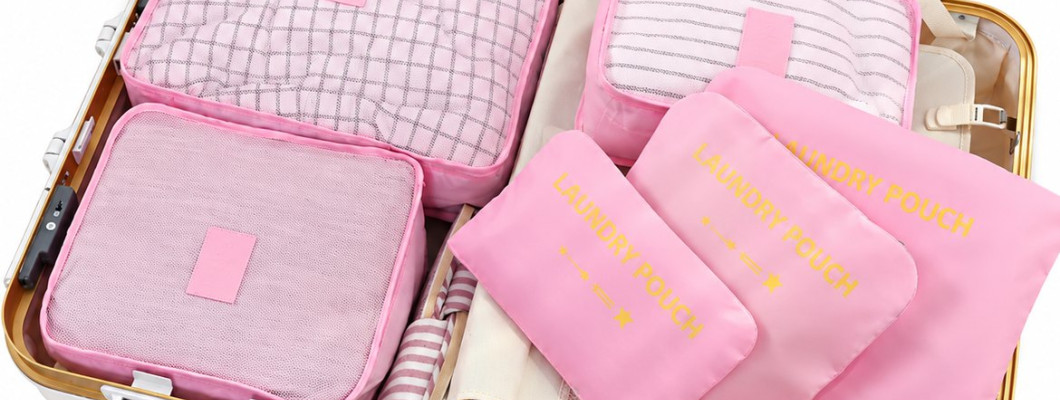
The K&M Shopping travel bag divider set contains six assorted-size fabric organizers, with mesh panels on the main pieces.
Published dimensions are:
40 × 30 × 11 cm.
31 × 27 × 11 cm.
29 × 20 × 11 cm.
33 × 25 cm.
27 × 22 cm.
25 × 15 cm.
Product information:
https://k-m.store/en/travel-and-trips/travel-bag-divider-set-6pcs
These are packing organizers, not compression or vacuum-storage bags. Exact fibre composition, water resistance, machine washing and double-zipper construction are not confirmed.
Use the dimensions to compare possible groups with your belongings. Do not assume a fixed garment count, shoe size or suitcase fit from a suggested use alone.
Check Your Suitcase from the Inside
Open the suitcase and assess its usable interior before deciding how to distribute the organizers.
Account for pockets, dividers and any internal protrusions. Decide which sections will hold clothing and where other belongings need space.
Try an initial arrangement with the organizers, then repeat it with the intended contents. Filled pieces occupy space differently from empty ones.
Keep access in mind. An organizer may fit neatly but still be inconvenient if everything else must be removed to reach it.
Do not rely only on the suitcase’s external dimensions or broad size description. Compare the actual interior with the filled arrangement you intend to carry.
Assign Sizes by Function
Begin with the groups that need the most space, rather than filling the largest piece automatically.
Depending on the trip, that group could be larger garments, one traveller’s clothing or several everyday items packed together.
Smaller pouches can give accessories and clothing essentials a clear place, but size alone should not decide the contents. Items that fit together physically may not be useful to retrieve together.
If a piece is difficult to close, revise the group rather than forcing the zipper. Reduce the contents or use another suitable piece.
A luggage organizer should support your real packing list. It should not encourage extra belongings or an arrangement that is difficult to repeat after use.
Example: A Short Stay in One Place
Suppose you are staying several nights at one accommodation and expect to choose your daily outfits there.
A category-based arrangement may be a useful starting point. Group larger garments, tops and smaller clothing separately where the sizes allow.
Prepare a compact arrival group if you expect to check in late, and decide where used clothing will go.
This is an example rather than a prescribed allocation for all six pieces. Your clothing dimensions and other luggage contents determine the actual distribution.
Rehearse arrival by retrieving the items you would want that evening. If you need to remove most of the suitcase, revise the arrival group or its position.
Example: Several Accommodation Stops
When moving between locations, you may prefer not to unpack everything at each stop.
Group the clothing needed for the first stage where it can be reached easily. Keep later-stage clothing organised separately, while giving shared garments a consistent place.
Avoid preparing a complete duplicate wardrobe for every stop. Identify what genuinely changes between stages and what will be reused.
Before leaving each accommodation, review the next stage. Move the relevant group into an accessible position and account for clothing already used.
The departure arrangement does not need to remain unchanged throughout the trip. Updating it is part of keeping the suitcase useful.
Example: A Business Trip with a Planned Event
A specific event can justify its own clothing group, provided the garments are suitable for that packing method.
Check the care needs of formal clothing rather than assuming packing cubes prevent creasing. Some items may need another transport or hanging arrangement.
Keep suitable event accessories in a known place so you are not searching for them while getting ready.
Everyday clothing, sleepwear and travel clothes can remain in broader categories. One fixed appointment does not require an outfit-by-day system for the whole journey.
Also consider arrival timing. The items you need before settling into your accommodation should remain accessible within the luggage arrangement appropriate to your trip.
Example: A Shared Family Suitcase
Start by deciding who will retrieve belongings during the trip. A system that only the person who packed understands may cause confusion later.
Grouping by person can make ownership clear. You can combine this with a shared arrival group if everyone understands its contents.
Use a recognisable description rather than relying solely on similar-looking bags. If you choose to add labels, keep them practical and avoid interfering with the closures.
Discuss where used items should return and which pieces contain shared supplies.
The best family system is not necessarily the most detailed. It is the one the relevant travellers can understand and maintain without repeatedly asking where something belongs.
Prepare a First-Night Group
Think about what you want before you are ready to unpack the entire suitcase. This might include sleepwear or a simple change of clothes.
Choose a suitably sized organizer and give it a convenient position. Packing the right items together achieves little if the group is buried beneath everything else.
Keep its purpose focused. It does not need to contain every item you might use during the first day.
Toiletries require their own containment assessment; do not assume an ordinary fabric organizer protects clothes from a leaking container.
A first-night group can work with either main packing method. It addresses a particular arrival situation without controlling the rest of the trip.
Plan for Used Clothing Before Departure
As the journey progresses, the balance between unused and used clothing changes.
Decide where used garments will go before that starts happening. Without a plan, they may gradually occupy whichever gaps are available and make the original categories unclear.
A separate organizer can provide organisational separation where appropriate, but do not assume it blocks moisture or odours. Deal appropriately with damp clothing before packing it.
An emptied piece may take on a new role if its condition and care requirements allow.
Expect the return arrangement to differ from the outbound one. Preserving a useful system matters more than preserving every original category.
Treat Shoes and Toiletries as Different Packing Tasks
A bag that physically accommodates an item is not automatically suitable for every condition in which that item might be packed.
For shoes, consider their size and condition and use appropriate separation from clothing. Do not infer complete dirt or moisture containment from fabric construction.
For toiletries, secure the containers and use suitable leak containment. Water resistance is not confirmed for this set, so the organizer should not be treated as the sole protection against spills.
Keep the different requirements visible in your planning.
Clothes, shoes and liquids may share a suitcase, but they do not necessarily need the same packing approach.
Run a Retrieval Test Before Closing the Suitcase
Choose three situations you expect during the journey: changing after arrival, selecting morning clothes and putting aside a used item.
Act them out using the packed arrangement. Notice which organizers you open and what you have to move.
Do the group descriptions still make sense? Can you return an unused garment without guessing where it belongs?
Then repack and check that the suitcase closes normally without forcing its contents or closures.
If something is awkward, change one group or location at a time. This makes it easier to identify the improvement rather than rebuilding the suitcase without understanding what went wrong.
Separate Organisation from Compression and Weight
A more orderly arrangement can help you see and use the available space, but it does not establish a guaranteed percentage of space saving.
Packing cubes also do not reduce the actual weight of the clothing inside them. Check the completed luggage weight rather than judging it from its tidy appearance.
If compression is essential to your decision, look for a product specifically designed and documented for that function. Do not transfer the feature to every luggage organizer.
Review your booking’s current baggage conditions through the relevant provider before departure.
When the contents still exceed the available space, revisit the packing list. An organizer cannot replace the decision to leave unnecessary items behind.
Keep the Routine Simple During the Stay
After changing clothes, return unused items to their assigned group and put used garments in their appropriate place.
If you are staying in one location, decide what to move into the accommodation’s storage. You do not need to keep everything inside packing cubes if another arrangement is more practical.
For a brief stay, removing one complete organizer may be simpler than distributing each garment individually.
Review the next day’s requirements without rebuilding the whole suitcase every evening.
The aim is to retain knowledge of where things are. A packing system should make the trip easier, not become a separate daily project.
Review the Set After Returning Home
Empty the organizers and inspect their condition. Follow the supplied care instructions and allow the pieces to dry fully before storage.
Do not assume machine washing is suitable when it is unconfirmed.
Record one part of the system that helped and one repeated inconvenience. Perhaps the arrival group was useful, while a smaller piece was assigned too many items.
Use those observations for the next trip rather than copying the arrangement automatically. Different weather, activities and travellers may require different groups.
Store the set where it can be found during planning, so you can compare the available sizes with your belongings before adding new accessories.
Common Mistakes to Avoid
Creating a separate outfit for every day without checking shared garments
Plan the actual clothing list before dividing it.
Splitting every small category into another bag
Too many groups can make a simple change of clothes unnecessarily complicated.
Filling all six pieces because they are available
Use only the pieces your journey needs.
Assuming mesh or zippers establish water resistance
These are different product characteristics.
Ignoring the return journey
Used clothing and other changes may require a revised distribution.
Forcing an overfilled closure
Reduce or redistribute the contents instead.
Copying another traveller’s layout without testing it
Use examples as starting points, then assess your own clothing and suitcase.
Before-Departure Checklist
I have considered the itinerary and accommodation changes.
I have chosen categories, outfits or a mixed system.
Each organizer has a clear purpose.
The filled pieces fit the suitcase interior.
Arrival essentials are accessible.
Used clothing has a planned place.
Shoes and toiletries have appropriate separation.
Compression and water resistance have not been assumed.
I have rehearsed retrieving and returning clothing.
The suitcase closes without forcing.
I have checked its final weight and relevant baggage conditions.
Anyone sharing the luggage understands the arrangement.
Quick Answers
Best starting point for one accommodation
Consider clothing categories, with a separate arrival group if useful.
Best starting point for repeated moves
Consider groups by travel stage, with shared garments in a known place.
Do all six organizers need to be used?
No. The set offers choices rather than a required packing volume.
Do organizers make luggage lighter?
No. Organisation and luggage weight are separate considerations.
Frequently Asked Questions
Are packing cubes and travel bag dividers the same thing?
The terms often describe organizers placed inside luggage. Compare the actual design, dimensions and stated purpose rather than assuming every product under those names has identical features.
Should I pack by outfit or clothing category?
Choose according to retrieval needs. Categories offer flexibility, while outfit or activity groups can suit specific plans. A mixed system can combine both advantages.
Will the six-piece set fit every suitcase?
No universal fit should be assumed. Compare the published dimensions with the usable interior and the space needed by your other belongings.
Are these compression packing cubes?
No. This set is described as an organizing system, not compression or vacuum storage. Do not expect a documented reduction in volume from it.
How many garments fit in one piece?
There is no fixed count. Clothing size, thickness and folding method affect capacity. Trial your own contents without overfilling.
Can I assign a piece to used clothing?
Yes, where suitable for organisational separation. Do not treat that as a promise of moisture or odour containment, and handle damp garments appropriately.
Can the bags hold toiletries?
Only with suitable sizing and appropriate container security and leak containment. Unconfirmed water resistance means the organizer alone should not be relied upon to protect other belongings.
Is rolling always better than folding?
Use a method suited to the garments and their care needs. Test the actual arrangement rather than assuming one method guarantees more space or prevents creasing.
How should two people share the set?
Consider grouping by person and agreeing on any shared categories. Make the contents and return places understandable to both travellers.
Can the organizers go in a washing machine?
Machine washing is unconfirmed. Follow the supplied care label and the product’s cleaning guidance, and dry the pieces fully before storage.
Step-by-Step: Build Your Packing System
Step 1: Outline the journey
Identify accommodation changes, fixed activities and arrival needs.
Step 2: Prepare the clothing list
Choose what you need before assigning organizer space.
Step 3: Remove unnecessary duplication
Review garments that can serve more than one planned outfit.
Step 4: Choose the grouping method
Use categories, outfits, travel stages or a combination.
Step 5: Match groups to dimensions
Compare the belongings with the available pieces and suitcase interior.
Step 6: Pack without forcing
Revise any group that exceeds its practical space.
Step 7: Rehearse retrieval
Test arrival, morning dressing and handling used clothing.
Step 8: Review before departure
Check closure, weight, accessibility and everyone’s understanding of shared luggage.
Conclusion
The most useful packing cube system follows the way you will use your clothes. Categories support flexible choices, while outfit or activity groups help with defined situations.
Start with the itinerary and packing list, match the groups to your suitcase and test access before leaving. Adjust the arrangement as the journey progresses.
Browse travel accessories at K&M Shopping:
Quick Summary
Choose the grouping system before filling the organizers.
Give arrival essentials a clear place.
Avoid adding clothes to complete artificial daily groups.
Compare filled pieces with the suitcase interior.
Plan for used garments and the return trip.
Keep organisation separate from compression, weight and waterproofing claims.
Read Also
How to Weigh Luggage at Home
https://k-m.store/shop/en/blog/how-to-weigh-luggage-at-home
This related guide addresses the weight check that remains necessary even when the suitcase is neatly arranged.
Leave a Comment