
Smart Entryway Organization Ideas Using Practical Storage Solutions
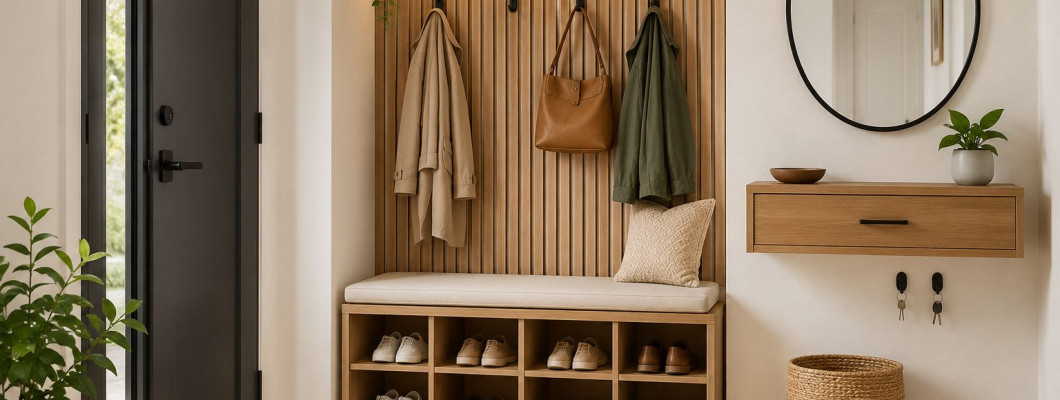
Smart Entryway Organization Ideas Using Practical Storage Solutions
A Practical Guide to Organizing Shoes, Bags, Keys, and Everyday Essentials While Making Better Use of Your Entryway Space
The entryway is the first area you use when you arrive home and the last space you pass through before leaving. Because of this daily activity, shoes, bags, keys, coats, umbrellas, mail, and other small items can quickly accumulate near the door.
Organizing an entryway does not necessarily require a large space or a built-in closet. Even a small entrance can become more practical by using a limited number of storage solutions such as wall hooks, shoe racks, baskets, shelves, narrow cabinets, and storage benches.
The main goal is to give frequently used items a clear and convenient place while keeping the doorway and walking path open and easy to use.
────────────────────────
Quick Answer
What is the best way to organize an entryway?
Start by removing items that do not need to stay near the entrance. Create a designated place for everyday shoes, keys, bags, and frequently used outerwear.
If space is limited, use walls and vertical storage instead of adding large furniture. Keep only regularly used items near the door and move seasonal or rarely used belongings to another storage area.
────────────────────────
Table of Contents
• Why is entryway organization important?
• What should you keep in your entryway?
• How to evaluate your entryway before organizing.
• How to remove unnecessary clutter.
• Best ways to organize shoes.
• How to organize bags and coats.
• How to create a designated place for keys and small essentials.
• How to use walls and vertical space.
• How to organize a small entryway.
• How to use storage benches and multi-purpose furniture.
• Entryway organization ideas for families.
• How to manage seasonal items.
• How to choose suitable entryway storage solutions.
• Common entryway organization mistakes.
• Daily habits for maintaining an organized entrance.
• Entryway organization checklist.
• Frequently asked questions.
• Conclusion.
• Related articles.
────────────────────────
Why Is Entryway Organization Important?
An entryway acts as a transition point between the outside and inside of your home. As a result, many different items pass through this area every day.
These may include:
• Shoes.
• Bags.
• Keys.
• Wallets.
• Coats.
• Umbrellas.
• Children's everyday items.
• Small purchases.
• Mail and papers.
Without designated storage locations, these items can begin accumulating on the floor, furniture, or surfaces near the door.
An organized entryway can help you:
• Enter and leave the home more easily.
• Reduce shoe clutter near the door.
• Find keys more quickly.
• Create designated places for bags and coats.
• Keep the walking path clearer.
• Prevent clutter from spreading into other rooms.
• Make the entrance easier to clean.
• Use a small entryway more efficiently.
────────────────────────
What Should You Keep in Your Entryway?
You do not need to store every pair of shoes, bag, or coat near the entrance.
Ideally, the entryway should contain only the items you regularly use when leaving or returning home.
These may include:
• Everyday shoes.
• Keys.
• Your daily bag.
• Frequently used outerwear.
• An umbrella when needed.
• School or work essentials used regularly.
• Small items you frequently need before leaving.
Seasonal shoes, rarely used bags, and extra coats are usually better stored in a closet or another suitable storage area.
────────────────────────
The Daily-Use Rule
Look at each item stored near the entrance and ask:
Do I use this regularly when entering or leaving the home?
If the answer is yes, giving it an accessible place in the entryway may be practical.
If you rarely use the item, it does not need to occupy the most convenient storage space.
This simple rule is particularly useful when organizing a small entryway.
────────────────────────
Create a Drop Zone for Everyday Essentials
A small drop zone provides a designated location for the items you carry when you return home.
It may include:
• A place for keys.
• A hook for a daily bag.
• A place for your wallet.
• A small tray for everyday essentials.
• A temporary location for incoming mail or papers.
Having one designated area can reduce the likelihood of leaving keys, wallets, and other small belongings in different places throughout the home.
Keep this area limited in size so it does not become another place where clutter accumulates.
────────────────────────
Organizing Everyday Shoes
Shoes are one of the most common sources of entryway clutter.
Start by determining how many pairs each person regularly uses, then create enough accessible storage for those shoes.
Possible solutions include:
• Shoe racks.
• Low storage units.
• Suitable baskets.
• Narrow shoe cabinets.
• Storage underneath an entryway bench.
Avoid keeping every pair of shoes near the entrance when space is limited.
Seasonal and rarely used shoes can be moved to another closet or storage area.
────────────────────────
Organizing Bags
Bags left on the floor or furniture can make an entryway feel crowded very quickly.
Give regularly used bags a clear storage location.
You can use:
• Wall hooks.
• Properly installed individual hooks.
• Shelves.
• Suitable baskets for certain lightweight items.
• Available space inside an entryway closet.
If several people use the entrance, consider assigning a specific hook or storage area to each person.
────────────────────────
Organizing Keys
Keys are small enough to become easily misplaced around the home.
Create one consistent location for them near the entrance.
Possible options include:
• A key holder.
• Small hooks.
• A designated tray.
• A small drawer.
• A wall-mounted organizer.
Choose a location that fits your normal routine and return your keys to the same place whenever you arrive home.
────────────────────────
Essential Entryway Storage Solutions
You do not need every type of organizer in one entryway.
Choose storage solutions according to the specific problems you need to solve.
Shoe Racks
A shoe rack helps keep frequently used footwear organized and away from the main walking path.
Wall Hooks
Hooks provide accessible storage for daily bags, coats, and other frequently used items.
Baskets
Baskets can group small items or everyday essentials when each basket has a clearly defined purpose.
Shelves
Shelves provide additional storage while making use of vertical wall space.
Storage Benches
A storage bench can provide a place to sit while putting on shoes and may also offer additional storage underneath or inside.
Narrow Cabinets
Shallow or narrow storage units may work well in entryways where a deeper cabinet would interfere with movement.
You can explore practical home organization and storage solutions from K&M Shopping at:
https://k-m.store/
Before choosing an organizer or storage unit, measure your entryway and determine exactly what you plan to store so that the product fits both the space and its intended purpose.
────────────────────────
How Do You Choose the Right Entryway Storage Solution?
Start by identifying the main organization problem.
If shoes constantly collect near the door, begin with shoe storage.
If bags and coats are usually left on chairs or furniture, wall hooks may be more useful.
If keys and small everyday items are frequently misplaced, create a dedicated drop zone.
If floor space is limited, use wall space and vertical storage instead of adding wide furniture.
Do not try to solve every organization problem by adding another storage box. In many cases, reducing the number of items kept in the entryway is the most effective first step.
────────────────────────
Measure the Entryway Before Buying Storage
Before purchasing storage furniture or organizers, measure:
• Entryway width.
• Available storage depth.
• Clearance required for the door to open fully.
• Available wall width.
• Suitable height for hooks or shelves.
• Space that must remain open for movement.
• Available space underneath an existing bench or shelf.
Make sure any new storage unit allows the door to operate properly and does not create an obstacle in the walking path.
────────────────────────
A Simple Principle for Entryway Organization
Every item that regularly enters the entryway should lead to one of three decisions:
Store it here because it is used frequently.
Move it elsewhere because it is used occasionally.
Remove it because it is no longer necessary.
When the entryway contains only the items that support your everyday routine, keeping the space organized becomes much easier.
How to Evaluate Your Entryway Before Organizing
Before adding shoe racks, hooks, baskets, shelves, or new storage furniture, take time to evaluate how your entryway is currently used.
Observe what normally accumulates near the door during several typical days. This can help you identify the storage your household actually needs instead of creating a system that looks organized at first but does not match your daily routine.
Identify:
• Items that enter and leave the home every day.
• The number of shoes usually kept near the door.
• Bags used regularly.
• Coats or outerwear that need accessible storage.
• Small items placed down when entering the home.
• Empty walls or unused areas that could provide storage.
────────────────────────
Start by Clearing the Entryway
One of the easiest ways to understand your available space is to temporarily remove the items stored in the entryway.
Gather shoes, bags, coats, umbrellas, papers, and small belongings, then sort them before returning anything.
Divide them into simple categories:
Keep in the Entryway
For items used daily or frequently.
Relocate
For items you need but that belong in another room, closet, or storage area.
Seasonal
For belongings used only during certain times of the year.
Remove
For damaged, unnecessary, or unused items that no longer need to remain in your home.
Once unnecessary items have been removed or relocated, it becomes much easier to determine how much entryway storage you actually need.
────────────────────────
How to Organize Shoes Practically
There is no single shoe organization system that works for every home.
The best solution depends on the size of your entryway, the number of people in your household, and how many pairs are used regularly.
Begin with everyday shoes.
If each person normally uses one or two pairs, create accessible storage for those pairs and move the rest to another closet or storage area.
Shoes can be organized using:
• An open shoe rack.
• A shoe cabinet.
• A narrow storage unit.
• Storage underneath a bench.
• Suitable baskets for certain types of footwear.
The important thing is to keep shoes away from the main walking path while making them easy to access and return after use.
────────────────────────
Where Should You Place a Shoe Rack?
Place the shoe rack close enough to the entrance to be convenient without interfering with the door or walking path.
Before deciding on the location, check that:
• The door can open fully.
• There is enough room to walk comfortably.
• Shoes are easy to access.
• The rack does not extend too far into the walkway.
• The surrounding floor remains easy to clean.
In a narrow entryway, a shallow shoe cabinet or vertical storage solution may be more suitable than a wide rack.
────────────────────────
Using an Entryway Bench
If space allows, a bench can serve more than one purpose.
It provides a convenient place to sit while putting on or removing shoes, and the space underneath or inside the bench can provide additional storage.
Depending on the design, it may hold:
• Everyday shoes.
• Small baskets.
• Frequently used outdoor essentials.
• Children's everyday items.
However, do not add a bench simply for appearance if it makes a small entryway difficult to use.
Maintaining a comfortable walking path should remain the priority.
────────────────────────
How to Organize Coats and Outerwear
If there is no closet near the entrance, wall hooks can provide practical storage for frequently used outerwear.
Keep only a limited number of current coats and jackets in the entryway.
Avoid using the hooks to store all seasonal clothing because too many items can make the space feel crowded and make individual pieces harder to access.
Move rarely used or out-of-season clothing to another closet.
────────────────────────
Choosing the Right Height for Wall Hooks
When installing hooks, consider who will use them.
Adults can have hooks at a convenient height, while children may benefit from lower hooks that they can reach easily when appropriate.
This can make it easier for children to hang their own bags or outerwear instead of leaving them on the floor.
Hooks and other wall-mounted storage should be installed appropriately for the wall type and the expected weight.
────────────────────────
Organizing Everyday Bags
Bags can occupy a surprising amount of space when they are placed on the floor, chairs, or entryway furniture.
Give frequently used bags a specific location.
This could be:
• A wall hook.
• An individual hook for each person.
• A shelf.
• Space inside an entryway closet.
• A suitable basket for lightweight items.
Travel bags, special-occasion bags, and other rarely used bags are usually better stored elsewhere.
────────────────────────
Create a Daily Departure Station
A small area near the entrance can be used for items you frequently need before leaving home.
Depending on your routine, it may include:
• Keys.
• Wallet.
• Work or transportation card.
• Sunglasses.
• Other small everyday essentials.
The purpose is not to display many items on an open surface. Instead, create one consistent location that reduces the need to search around the home before leaving.
────────────────────────
How to Organize Mail and Papers
Mail, receipts, bills, and other papers can quickly accumulate near the entrance.
Create one temporary location for incoming papers, such as:
• A small document holder.
• A designated basket.
• A drawer.
• A vertical file organizer.
Review this area regularly and move documents to the appropriate location for action, filing, or disposal.
Avoid using the entryway as permanent document storage.
────────────────────────
What Should You Do With Purchases When You Arrive Home?
Shopping bags and packages can easily remain near the entrance longer than intended.
Use a simple rule:
Move new items to their permanent locations as soon as practical.
Groceries go to the kitchen.
Bathroom supplies go to their appropriate storage area.
Clothing goes to the closet.
Packages can be opened and sorted, with packaging materials handled appropriately afterward.
This prevents the entryway from becoming a waiting area for items that belong elsewhere.
────────────────────────
Use Entryway Walls for Additional Storage
An empty wall can provide useful storage without taking up much floor space.
Depending on your needs, it can accommodate:
• Hooks.
• Shelves.
• A key holder.
• A small wall organizer.
• Suitable vertical storage.
Choose only the solutions that serve a clear purpose.
Filling every section of the wall with organizers can make a small entryway feel more crowded rather than more functional.
────────────────────────
Using High Shelves
If the entryway is narrow but has suitable wall height, an upper shelf may provide storage for less frequently used items.
It can hold:
• Baskets for seasonal items.
• Backup supplies.
• Items that do not need to be accessed every day.
Use appropriate baskets or storage boxes when they help keep similar items together, and make sure stored items can be accessed safely when needed.
────────────────────────
How to Organize Umbrellas
If umbrellas are frequently used where you live, give them a designated location near the entrance.
A suitable umbrella holder or another defined area can keep them accessible without interfering with movement.
Wet umbrellas should be handled in a way that allows them to dry appropriately and helps prevent water from creating a slippery floor or damaging nearby surfaces.
────────────────────────
How to Organize a Small Entryway
In a small entrance, every storage solution should have a clear purpose.
Focus on:
• Reducing the number of shoes near the door.
• Using hooks instead of large furniture when practical.
• Making use of wall space.
• Choosing shallow or narrow storage units.
• Using vertical space.
• Keeping as much floor space open as possible.
• Reducing the number of visible items.
The fewer unnecessary items kept in the entryway, the easier the space becomes to use and maintain.
────────────────────────
How Do You Organize an Entryway Without a Closet?
A built-in closet is not necessary for creating an organized entrance.
Depending on the available space, you can combine:
• A small shoe rack.
• Wall hooks.
• An upper shelf.
• A basket for everyday essentials.
• A key holder.
• A storage bench if space allows.
Do not try to compensate for the lack of a closet by adding too many separate storage units.
Choose the smallest number of solutions that effectively support your daily routine.
────────────────────────
Quick Answer
How can you prevent shoes from piling up near the front door?
Limit the entryway to a practical number of everyday shoes for each household member and provide a clear shoe rack or storage area near the door. Move seasonal and rarely used footwear to another closet or storage space, and review the shoe area regularly so it does not become overcrowded.
────────────────────────
The One-Place Rule
Give every major category of entryway items one consistent location.
One place for shoes.
One place for keys.
One place for bags.
One place for coats.
One place for incoming papers.
One place for umbrellas when needed.
When everyone knows where everyday items belong, maintaining an organized entryway becomes part of the normal routine rather than a repeated cleanup project.
How to Use Vertical Space in an Entryway
When floor space is limited, walls and vertical areas can provide valuable additional storage without making the entrance difficult to navigate.
Instead of placing several pieces of furniture on the floor, consider using hooks, shelves, and vertical organizers according to your household's needs.
Vertical storage can be useful for:
• Bags.
• Frequently used coats.
• Keys.
• Hats and accessories.
• Small baskets and storage boxes.
• Some seasonal essentials.
• Items regularly needed before leaving home.
The goal is to move suitable items away from the floor while keeping frequently used belongings easy to reach.
────────────────────────
Using Wall Hooks
Wall hooks are one of the simplest ways to add practical storage to an entryway, especially when there is no closet near the door.
They can be used for:
• Everyday bags.
• Frequently used coats.
• Children's outerwear.
• Hats.
• Lightweight daily essentials.
Avoid placing too many items on a single hook. Overloaded hooks can make individual items difficult to access and create visual clutter.
Keep only currently used items in the entryway and move the rest to the main storage areas of the home.
────────────────────────
Create a Personal Zone for Each Family Member
If several people use the same entrance, dividing storage into simple individual zones can make everyday organization easier.
Each person could have:
• A hook for a bag.
• A designated shoe area.
• A small basket when needed.
• A place for frequently used personal items.
These zones do not need to be large. A single hook and a defined shoe space may be enough to make each person's belongings easier to manage.
────────────────────────
Entryway Organization for Families
The more people who use an entryway, the more items are likely to pass through it every day.
For this reason, it is especially important to decide what actually needs to remain near the entrance.
A simple family organization system may include:
• Everyday shoe space for each person.
• Hooks for bags.
• Storage for currently used outerwear.
• One location for keys.
• A small area for incoming papers.
• Individual baskets for certain personal items when necessary.
Review these areas regularly so they do not become permanent storage for unused belongings.
────────────────────────
Organizing Children's Everyday Items
School bags, shoes, and outerwear can quickly create clutter around the entrance.
Make children's storage locations simple and accessible when appropriate.
Consider providing:
• A hook at a suitable height.
• A designated place for a school bag.
• A clear location for everyday shoes.
• A small basket for frequently used items.
The easier the system is to understand and use, the easier it becomes for children to return belongings to their designated places instead of leaving them on the floor or furniture.
────────────────────────
Using Baskets Effectively
Baskets can be useful for grouping similar items, but they can also become containers for miscellaneous clutter when they do not have a specific purpose.
Before adding a basket, decide exactly what it will contain.
A basket might be used for:
• Seasonal accessories.
• Small children's items.
• Everyday departure essentials.
• Items that need to be moved to another part of the home.
If a basket regularly fills with unrelated objects, review its contents and purpose instead of immediately adding another basket.
────────────────────────
Using Storage Boxes With Lids
Closed storage boxes are generally more suitable for items that are not needed every day.
Depending on your entryway, they may hold:
• Seasonal accessories.
• Backup supplies.
• Rarely used items.
• Belongings that need to be kept but do not require frequent access.
Place boxes on a suitable shelf or inside a storage unit, and label them when the contents cannot be identified easily.
────────────────────────
How to Manage Seasonal Items
Entryway storage needs can change throughout the year.
During one season, you may need additional space for coats and umbrellas, while another season may require different everyday items.
Instead of keeping every seasonal item in the entryway all year, rotate belongings according to current needs.
When a season ends:
• Clean items before storage when appropriate.
• Remove anything that is no longer needed.
• Move seasonal belongings to another storage area.
• Keep only currently useful items in the entryway.
This prevents accessible storage areas from remaining overcrowded throughout the year.
────────────────────────
Create a Place for Weather-Related Essentials
If umbrellas or other weather-related items are regularly used, create a small designated area for them near the entrance.
Keep them accessible without allowing them to interfere with the walking path.
Wet items should be allowed to dry appropriately rather than being placed immediately inside closed baskets or against surfaces that may be affected by moisture.
────────────────────────
Organizing Pet Essentials Near the Entryway
If certain pet supplies are regularly used when leaving the home, a small designated storage area near the entrance may be convenient.
Keep only the items associated with the regular departure routine nearby, while other pet supplies remain in their main storage location.
The same principle applies to other entryway belongings: frequently used items can stay close to the door, while occasional items can be stored elsewhere.
────────────────────────
Using the Space Behind the Door
In some entryways, the area behind the door may provide additional storage, provided that any organizer does not interfere with safe and normal door operation.
Before using this space, check:
• Available clearance.
• Whether the organizer could hit the wall or nearby furniture.
• Whether it restricts the door from opening fully.
• Whether the installation method is appropriate for its intended use.
If the entrance is very narrow, allowing the door to operate freely is more important than using every available section for storage.
────────────────────────
Use Multi-Purpose Furniture
In a small entryway, furniture that serves more than one function can reduce the number of separate pieces required.
Examples include:
• A bench with shoe storage underneath.
• A bench with internal storage.
• A narrow unit combining drawers and shelves.
• A wall unit combining hooks and shelving.
• A shoe cabinet with a surface that can hold a small organizer for everyday essentials.
Multi-purpose furniture can increase useful storage without filling the entryway with several separate units.
────────────────────────
Does an Entryway Need a Console Table?
Not every entrance needs a table.
If you have sufficient space and need a small surface for keys or everyday essentials, a narrow console may be practical.
However, in a very small entryway, a table can reduce walking space without providing enough useful storage.
A small wall-mounted shelf or organizer may be a better alternative when floor space is limited.
────────────────────────
How to Choose Storage for a Narrow Entryway
When selecting storage for a narrow entrance or hallway, pay close attention to depth, not only width.
Choose a solution that:
• Does not interfere with walking.
• Allows the door to open properly.
• Provides enough storage for the intended items.
• Makes use of height when appropriate.
• Allows the surrounding area to be cleaned easily.
• Does not create unnecessary projections into the walking path.
Measure the available space before purchasing instead of relying only on visual estimates.
────────────────────────
Practical Storage Solutions for an Organized Entryway
Choose storage products according to the specific problem you want to solve, whether it involves shoes, bags, small essentials, or limited available space.
Depending on the entryway, useful options may include:
• Shoe racks.
• Baskets.
• Storage boxes.
• Wall hooks.
• Narrow storage units.
• Shelves.
• Small-item organizers.
• Multi-purpose storage solutions.
You can explore practical home organization and storage options from K&M Shopping at:
https://k-m.store/
Before selecting a product, determine where it will be placed, measure the available area, and identify exactly what you intend to store.
────────────────────────
Create a Place for Items That Need to Leave the House
A small temporary basket or designated area can be useful for items you need to remember when leaving home.
These may include:
• An item that needs to be returned to a store.
• Something that needs to be delivered to another person.
• A document you need to take with you.
• An item that needs to be placed in the car.
Keeping these belongings in one location can reduce the chance of forgetting them.
Review and empty this area regularly so that it does not become permanent storage.
────────────────────────
Managing Items That Enter the Home
The entryway is not only where items leave the home. It is also the first place where packages, purchases, papers, and new belongings arrive.
To prevent accumulation, process these items as soon as practical.
Ask:
Where is this item's permanent location?
Does it need to be opened or sorted?
Does it belong in another room?
Is there packaging that should be removed appropriately?
Avoid allowing the entryway to become long-term storage for items waiting to be handled.
────────────────────────
How Can You Make an Entryway Feel More Spacious?
Even a small entrance can feel more open when fewer items remain visible.
Try to:
• Keep as much floor space open as possible.
• Limit the number of shoes on display.
• Use vertical storage.
• Choose storage units that fit the scale of the space.
• Group small belongings instead of spreading them across surfaces.
• Leave some surfaces open.
• Move rarely used items elsewhere.
• Maintain a clear path from the door into the home.
Open space is an important part of organization and does not need to be filled.
────────────────────────
Quick Answer
What are the best storage solutions for a small entryway?
Start with a compact shoe rack or narrow cabinet, use wall hooks for bags and outerwear, create a small designated place for keys, and add vertical shelving only when additional storage is needed. Keep everyday essentials near the entrance and avoid large furniture that reduces walking space.
────────────────────────
Function Before Appearance
Before adding any organizer or piece of furniture to your entryway, ask:
What problem will this solve?
If an item does not have a clear function, it may simply occupy valuable space.
Start with your everyday needs, then choose the smallest number of storage solutions that make entering and leaving your home easier and more organized.
Common Entryway Organization Mistakes
An entryway may look perfectly organized immediately after a cleanup, but clutter can quickly return if the storage system does not match the daily habits of the people using the space.
The goal is not to fill the entrance with baskets, shelves, and organizers. A practical system should make it easier to put things away whenever you enter or leave the home.
────────────────────────
1. Keeping Too Many Shoes Near the Door
One of the most common causes of entryway clutter is storing more shoes near the entrance than the household actually uses every day.
Instead of keeping every pair by the door, provide enough accessible space for frequently used footwear.
Move items such as:
• Seasonal shoes.
• Special-occasion shoes.
• Rarely used footwear.
• Extra pairs.
to another closet or suitable storage area.
Reducing the number of shoes in the entryway makes the floor easier to keep clear and organized.
────────────────────────
2. Buying Storage Before Measuring the Entryway
A shoe cabinet, bench, or storage unit may look suitable in a store or online but still be too deep for your hallway or interfere with the front door.
Before purchasing storage, measure:
• Available width.
• Available depth.
• Available height.
• Door clearance.
• Walking path width.
• Distance from nearby furniture.
Measurements are especially important in narrow entryways where even a small difference in furniture depth can affect movement.
────────────────────────
3. Using the Entryway as Permanent Storage
An entryway is primarily a transition area rather than an additional storage room.
Packages, shopping bags, boxes, and items waiting to be moved elsewhere can quickly create clutter when they remain near the entrance.
Whenever possible, move incoming items to their permanent storage locations instead of allowing them to stay by the door.
────────────────────────
4. Overloading Wall Hooks
Wall hooks are practical, but they become less useful when too many coats, bags, and accessories are placed on them.
Keep only frequently used outerwear and bags on accessible hooks.
Move out-of-season clothing and rarely used items to another closet or storage area.
This makes everyday items easier to reach and reduces visual clutter.
────────────────────────
5. Having No Designated Place for Keys
Without a consistent storage location, keys can move between tables, bags, kitchens, and other rooms.
Create one designated place near the entrance.
This could be:
• A key holder.
• Small hooks.
• A tray.
• A drawer.
• A wall organizer.
The most important part is returning the keys to the same location every time.
────────────────────────
6. Using Baskets Without a Clear Purpose
Adding baskets can make an area appear organized initially, but a basket without a specific purpose may quickly become a container for miscellaneous clutter.
Assign a clear category to each basket.
For example:
• Seasonal accessories.
• Children's everyday items.
• Departure essentials.
• Items that need to be moved elsewhere.
If a basket regularly contains unrelated objects, review its contents instead of adding another container.
────────────────────────
7. Ignoring the Walking Path
It is easy to focus on adding storage and forget that the primary purpose of an entryway is to provide comfortable access into and out of the home.
Avoid placing a shoe rack, bench, table, or storage unit where it:
• Prevents the door from opening properly.
• Makes the walkway unnecessarily narrow.
• Makes carrying bags or packages difficult.
• Creates congestion when several people use the entrance.
A clear walking path is more important than adding another storage unit.
────────────────────────
8. Keeping Seasonal Items in the Entryway All Year
Coats, shoes, umbrellas, and accessories that are not currently needed can occupy valuable everyday storage space.
Review the entryway as seasonal needs change.
Move out-of-season items to another storage location and keep accessible areas available for belongings currently in use.
────────────────────────
9. Ignoring the Needs of Different Household Members
An organization system that works for one person may not work equally well for an entire family.
If children use the entryway, provide accessible storage at an appropriate height when practical.
For households with several people, consider assigning clear areas for shoes, bags, and frequently used personal items.
The system should reflect how the household actually uses the space.
────────────────────────
10. Buying Too Many Organization Products
More baskets, boxes, hooks, and shelves do not automatically create a better-organized entryway.
Sometimes the problem is simply that too many belongings are being stored near the door.
Declutter and reduce unnecessary items first, then add storage only when it has a specific function.
────────────────────────
11. Filling Every Available Space
Not every empty wall, corner, or surface needs to be used for storage.
Leaving some open space can:
• Make movement easier.
• Make the entrance feel larger.
• Simplify cleaning.
• Reduce visual clutter.
• Make important everyday items easier to see.
Open space is part of an effective organization system.
────────────────────────
12. Creating an Organization System That Is Too Complicated
If putting away a daily bag requires opening several doors or moving other objects first, the bag is more likely to be left somewhere convenient instead.
Keep frequently repeated actions simple.
Everyday bags need accessible storage.
Daily shoes need a convenient location.
Keys need one consistent place.
Frequently used items should be as easy to put away as they are to take out.
────────────────────────
Daily Habits That Help Keep an Entryway Organized
Maintaining an organized entrance does not require a complete cleanup every day.
Simple habits can prevent clutter from accumulating:
• Return keys to their designated location when you arrive home.
• Put everyday shoes in their storage area.
• Hang bags instead of leaving them on the floor.
• Move purchases to their proper locations.
• Remove empty packaging after opening deliveries.
• Return coats to hooks or closets.
• Process incoming mail instead of allowing it to accumulate.
• Remove items that do not belong in the entryway.
────────────────────────
The Five-Minute Entryway Reset
Spend five minutes at the end of the day reviewing the entrance.
During this short reset, you can:
• Arrange everyday shoes.
• Return bags to their hooks.
• Move misplaced items to the appropriate rooms.
• Sort incoming papers.
• Remove unnecessary objects.
• Return keys and small essentials to their places.
• Make sure the walking path remains clear.
A short daily reset can prevent small amounts of clutter from developing into a larger organization project.
────────────────────────
Weekly Entryway Review
Once a week, review the area more thoroughly.
Check:
• Shoes near the entrance.
• Bags that are no longer being used regularly.
• Coats and outerwear.
• Mail and papers.
• Basket contents.
• Items waiting to be moved elsewhere.
• Seasonal belongings.
• Shoe racks and other storage areas.
Move anything that no longer needs to remain in the entryway to its appropriate location.
────────────────────────
Seasonal Entryway Review
Changes in weather and routine provide a useful opportunity to review entryway storage.
Check:
• Shoes.
• Outerwear.
• Umbrellas.
• Hats and accessories.
• Other weather-related essentials.
Keep items suitable for current needs accessible and move the rest to seasonal storage.
────────────────────────
Entryway Organization Checklist
- Remove unnecessary items.
- Measure the entryway before buying storage.
- Keep the walking path clear.
- Create storage for everyday shoes.
- Move rarely used shoes elsewhere.
- Give keys one consistent location.
- Create a place for everyday bags.
- Organize coats and outerwear.
- Use wall hooks when appropriate.
- Make use of vertical storage.
- Give each basket or box a clear purpose.
- Create a temporary location for incoming papers.
- Move purchases and packages to their permanent locations.
- Rotate seasonal belongings when necessary.
- Keep frequently used storage easy to access.
- Return items to their places every day.
- Review the entryway once a week.
────────────────────────
How Do You Know if Your Entryway Organization System Works?
A successful organization system is not measured only by how the entryway looks immediately after cleaning.
The system is working when:
• You can find your keys quickly.
• Everyone knows where everyday shoes and bags belong.
• The doorway and walking path remain easy to use.
• Shopping bags and packages do not accumulate.
• Items can be returned to their places quickly.
• The floor is easy to clean.
• You do not need to completely reorganize the entryway repeatedly.
If clutter continues to appear in the same location, that usually indicates that part of the organization system needs to be adjusted.
────────────────────────
What Should You Do if Shoes Keep Returning to the Floor?
First, examine the shoe storage itself.
The problem may be that the storage area is:
• Too far from the door.
• Too small.
• Filled with rarely used shoes.
• Difficult for children to access.
• Too inconvenient for everyday use.
Create enough accessible space for frequently used footwear and make putting shoes away as simple as possible.
A practical system should support everyday behavior rather than work against it.
────────────────────────
What Should You Do if the Entryway Table Keeps Becoming Cluttered?
Start by identifying what repeatedly accumulates on the surface.
If it is keys and wallets, create a small organizer for them.
If it is mail and papers, provide one temporary document location.
If the items belong in other rooms, move them regularly.
If the table itself encourages clutter without providing an important function, consider whether the entryway actually needs it.
────────────────────────
How Can You Keep an Entryway Organized With Children?
Keep the system clear and simple.
When appropriate, give each child:
• A place for shoes.
• A hook for a bag.
• A location for outerwear.
• A small basket for everyday essentials.
Place suitable storage within easy reach and avoid creating too many complicated categories.
The clearer the destination for each item, the easier it becomes for children to participate in keeping the entrance organized.
────────────────────────
Quick Answer
How often should you organize an entryway?
Return shoes, bags, and keys to their designated locations every day, and move purchases, packages, and unrelated items out of the entryway as soon as practical. Review the area weekly for accumulated belongings, and perform a larger seasonal review to rotate shoes, outerwear, and weather-related items.
────────────────────────
How Can You Make an Entryway Faster to Reset?
Reduce the number of decisions required when entering the home.
Give keys one location.
Give everyday shoes one storage area.
Give each regularly used bag a clear place.
Give incoming papers one temporary location.
Give items that need to leave the house one designated area.
When every category has an obvious destination, resetting the entryway becomes part of the normal arrival and departure routine rather than a separate organization task.
────────────────────────
Create an Organization System That Lasts
The most effective entryway organization system is one that matches how your household actually uses the space.
If shoes are removed immediately beside the door, place shoe storage nearby.
If bags are the first items put down after entering, position hooks where they are easy to reach.
If keys are frequently misplaced, give them one visible and consistent location.
Start with your household's actual habits and build storage around those habits. This makes maintaining an organized entryway much easier over time.
Frequently Asked Questions About Entryway Organization
1. What Is the Best Way to Organize an Entryway?
Start by removing items that do not need to remain near the entrance, then create a clear storage location for each category of everyday essentials.
Provide space for frequently used shoes, one consistent location for keys, hooks or another suitable area for bags and outerwear, and a small temporary place for incoming papers or items you need when leaving home.
If the entryway is small, use walls and vertical storage instead of adding large furniture.
────────────────────────
2. How Do You Organize a Small Entryway?
In a small entryway, focus on keeping the floor and walking path as open as possible.
Consider using:
• A compact shoe rack or narrow shoe cabinet.
• Wall hooks.
• Vertical shelving.
• A small key holder.
• Baskets with clearly defined purposes.
• A storage bench if sufficient space is available.
Keep only everyday essentials near the entrance and move rarely used belongings to another closet or storage area.
────────────────────────
3. How Can You Prevent Shoes From Piling Up Near the Door?
Determine a practical number of everyday shoes for each household member and provide a clear storage location for them.
Move seasonal shoes, special-occasion footwear, and rarely used pairs to another storage area.
If shoes continue accumulating on the floor, check whether the shoe rack is conveniently located, easy to use, and large enough for the footwear used most frequently.
────────────────────────
4. How Do You Organize an Entryway Without a Closet?
You can create an organized entrance even without a built-in closet.
Use a simple combination of storage solutions such as:
• Wall hooks for bags and coats.
• A compact shoe rack or cabinet.
• An upper shelf for selected items.
• A key holder.
• A basket for everyday essentials.
• A narrow storage unit when space allows.
Choose the smallest number of storage solutions that meet your actual needs instead of trying to replace a closet with too many separate pieces of furniture.
────────────────────────
5. Where Should You Keep Keys in an Entryway?
The best location is one consistent place that is easy to access when entering and leaving the home.
You can use a wall-mounted key holder, small hooks, a tray, or a nearby drawer.
The specific organizer matters less than developing the habit of returning your keys to the same place every time.
────────────────────────
6. What Is the Best Way to Organize Bags and Coats?
Keep only frequently used bags and current outerwear near the entrance.
Use hooks, suitable wall storage, or available closet space, and consider assigning an individual location to each household member.
Move rarely used bags and out-of-season clothing to other storage areas so the entryway does not become overcrowded.
────────────────────────
7. Is a Storage Bench Useful in an Entryway?
A storage bench can be practical when the entrance has enough space.
It provides a place to sit while putting on or removing shoes and may also offer storage underneath or inside.
In a narrow entryway, however, maintaining a comfortable walking path should take priority. If a bench restricts movement or interferes with the door, a narrow shoe cabinet or wall-mounted storage may be more suitable.
────────────────────────
8. How Can You Use Wall Space in a Small Entryway?
Walls can provide additional storage without occupying much floor space.
Practical options include:
• Hooks for bags.
• Hooks for outerwear.
• Shelves.
• A key holder.
• Small wall organizers.
• An upper shelf for less frequently used items.
Use wall space according to actual storage needs and avoid adding so many organizers that the entrance begins to feel crowded.
────────────────────────
9. How Can You Keep an Entryway Organized With Children?
Make storage locations clear and easy to use.
When appropriate, provide each child with:
• A place for everyday shoes.
• A hook for a school bag.
• A location for outerwear.
• A small basket for selected daily essentials.
Place suitable storage within easy reach and minimize the number of steps required to put belongings away.
────────────────────────
10. How Do You Choose the Right Storage Products for an Entryway?
Begin by measuring the available space and identifying the specific problem you want to solve.
Before choosing a storage product, ask:
• What will I store in it?
• Where will I place it?
• Does it fit the available space?
• Will it interfere with the door or walking path?
• Will the contents remain easy to access?
• Do I actually need it?
You can explore practical home organization and storage solutions from K&M Shopping at:
https://k-m.store/
Choose products according to the dimensions of your entryway and your household's actual storage needs rather than appearance alone.
────────────────────────
Conclusion
Entryway organization begins by understanding which items enter and leave the home with your household every day.
Instead of keeping every pair of shoes, bag, and piece of outerwear near the door, reserve this valuable space for frequently used belongings and move seasonal or occasional items elsewhere.
Create a designated shoe area, one consistent location for keys, accessible storage for bags and outerwear, and a small temporary place for incoming papers or items that need to leave the house.
In a small entryway, make use of walls and vertical space, choose narrow or multi-purpose storage solutions, and maintain enough clearance for the door and walking path.
Successful organization is not determined by the number of baskets, boxes, shelves, or organizers you own. The most important factor is whether the system is simple enough to use consistently.
When everyone knows where shoes, bags, keys, and other everyday essentials belong, clutter is less likely to spread throughout the entrance and into other areas of the home.
────────────────────────
Quick Summary
For a more organized entryway:
• Keep only frequently used items near the entrance.
• Limit the number of shoes stored by the door.
• Give keys one consistent location.
• Use hooks for everyday bags and outerwear.
• Make use of walls and vertical storage.
• Choose narrow storage units for small entryways.
• Give every basket or box a specific purpose.
• Move purchases and packages to their permanent locations promptly.
• Rotate seasonal belongings when necessary.
• Keep the doorway and walking path clear.
• Return everyday items to their designated locations.
• Review the entryway once a week.
────────────────────────
How to Organize an Entryway From the Beginning
If you are organizing your entrance for the first time, follow this simple sequence:
1. Remove accumulated items from the entryway.
2. Eliminate belongings that are no longer needed.
3. Move items that belong in other rooms.
4. Identify the essentials used every day.
5. Measure the available space.
6. Create a designated shoe storage area.
7. Provide storage for bags and outerwear.
8. Establish one consistent location for keys.
9. Use wall space if additional storage is needed.
10. Review the system after several days and adjust any area where clutter continues to return.
────────────────────────
Related Articles
• Smart Home Office Organization Ideas Using Practical Storage Solutions.
• Smart Kids Room Organization Ideas Using Practical Storage Solutions.
• Smart Bedroom Organization Ideas Using Practical Storage Solutions.
• Smart Laundry Room Organization Ideas Using Practical Storage Solutions.
• Smart Bathroom Organization Ideas Using Practical Storage Solutions.
• Smart Kitchen Organization Ideas for Small Spaces.
• Practical Home Storage Ideas for Small Spaces.
────────────────────────
Thank You for Reading!
An organized entryway can make everyday arrivals and departures easier while helping prevent shoes, bags, keys, and other essentials from spreading into the rest of the home.
Start with the items you use most frequently, give every category a clear storage location, and add organization products only when they serve a practical purpose.
Even a small entrance can be used efficiently when the walking path remains clear and walls, shelves, hooks, and organizers are selected according to the size and function of the space.
To explore organization and storage options for your entryway and other areas of the home, visit K&M Shopping:
https://k-m.store/
Leave a Comment