
How to Organise Small Toys: A Practical Guide to Play Mats That Become Storage Bags
How to Organise Small Toys: A Practical Guide to Play Mats That Become Storage Bags
A box of building blocks comes out after breakfast. By lunchtime, some pieces are beside the sofa, a few cars have joined the activity, and an unfinished building occupies the middle of the room. Packing everything away now involves several different decisions.
Which pieces belong together? What should stay assembled? Where will the toys go when the floor needs to be clear again?
A play mat that gathers into a storage bag can help connect the play area with the place where loose toys are kept. However, it works best when the toy selection, location and cleanup routine are planned together. Simply collecting every available toy into one bag can move the clutter without making the next play session easier.
This guide explains how to choose a useful setup, check the available space and establish a manageable routine. It also covers the confirmed details of the K&M Shopping play mat and the limits to keep in mind.
Quick Answer: What Is the Easiest Way to Collect Small Toys After Play?
Start with one compatible group of toys on a clearly defined play surface. Before gathering the mat, return pieces that have moved outside it, remove anything needing separate storage and distribute the remaining toys so the closure can operate properly.
A storage play mat helps collect loose items already on its surface. It does not sort mixed collections, retrieve pieces from under furniture or preserve assembled models automatically. Adults should supervise the closure and keep cords or fastening parts away from children’s necks.
Contents
Identify what makes cleanup difficult.
Separate collecting from sorting.
Check the space for a 120 cm mat.
Understand the product’s features and limits.
Choose toys and prepare the first session.
Build a repeatable cleanup routine.
Adapt the setup for shared rooms and travel.
Review care, storage and common mistakes.
Use a practical checklist.
Find answers to ten common questions.
Identify the Actual Cleanup Problem
Before buying another organiser, watch what happens during a normal play session. The difficulty may be scattered pieces, but it could also be an overcrowded toy box or several unrelated activities sharing the same floor space.
If a child empties a container to find one particular car, they may need a clearer way to see the collection. If multiple sets become mixed, they may need simpler grouping. If toys are constantly moved out of a walkway, the play location may need changing.
A gathering mat is most useful when the main task is collecting a group of loose toys that can be stored together. It cannot resolve every sorting or storage problem by itself.
Collecting and Sorting Are Different Jobs
Collecting means bringing loose items into one place. Sorting means deciding which items belong together. A mat can make collection more convenient, but the contents still need a sensible organising principle.
For example, a collection of building pieces used together may work well as one group. Adding puzzle pieces, drawing paper and doll accessories could make finding the next activity harder.
Choose a clear purpose for the mat: one construction collection, a selection of vehicles or another compatible activity. Keep anything requiring a separate arrangement elsewhere.
The useful test is what happens when the bag opens again. If the child can recognise and use the contents without searching through unrelated objects, the grouping is serving its purpose.
Measure the Open Space Before Choosing the Location
The K&M Shopping mat has a listed open diameter of 120 cm. Check that a circle of this size fits where you intend to use it.
Measure with furniture in its everyday position. A chair pulled out for use or a door opening into the room can change the available space considerably.
Allow access around the edges for gathering the mat afterwards. A location that requires moving a table or reaching under a sofa at every cleanup may become inconvenient.
Keep the play area away from stairs, heat sources and main walking routes. The goal is a usable location throughout the activity, including the moments when people enter the room or the family needs to pack away.
What the K&M Shopping Play Mat Offers
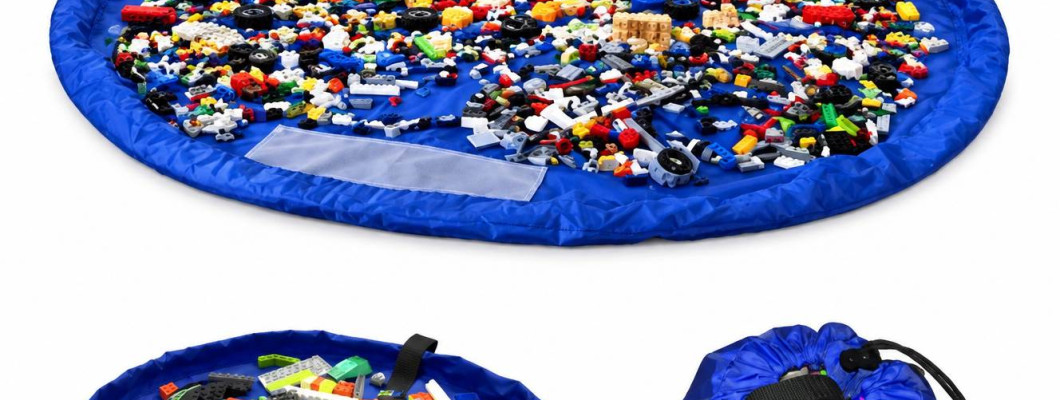
The Kids Play Mat with Toy Storage Bag is described as a round, foldable mat that gathers into a bag for suitable toys. Its confirmed diameter when open is 120 cm.
The listing identifies building blocks, toy cars, small dolls and play accessories as possible contents. Colour options currently listed are green, pink and blue, subject to availability when ordering.
You can review the product and available options here:
The open diameter is not a stated storage capacity or carrying limit. The available information does not specify the material, thickness, waterproofing or a full washing method. It should also not be treated as padded fall-protection equipment.
Decide Whether the Format Fits Your Toys
Consider how the toys behave when gathered together. Loose pieces that can share a container are different from a delicate assembled model or a puzzle that must remain laid out.
If the main activity involves construction, plan a separate place for anything the child wants to keep assembled. The remaining loose pieces can then be collected without treating the finished model as another item to squeeze into the bag.
Large, awkward or sharp objects are not a good starting point. Avoid assuming that an item is suitable simply because it fits somewhere on the open mat.
Select a modest collection first, then judge how comfortably it can be used and gathered.
Prepare the First Session
Spread the mat fully on a clean, level, dry surface. Read any supplied instructions and familiarise yourself with the closure before adding toys.
Do not assume a particular fastening method from the general product category. Check the actual item rather than relying on how another storage mat works.
Explain the arrangement simply: the selected toys are used here, and pieces that move outside the area return before packing away. There is no need to introduce a long list of rules.
Add enough toys for a meaningful activity while leaving room to handle them. Filling the surface with the entire collection can remove the space needed for play.
Keep the Edges Accessible
During play, some pieces will naturally move. The aim is not to interrupt the child every time a car crosses the boundary.
Instead, keep the overall arrangement workable and return scattered items at a suitable pause. As cleanup approaches, clear the edges so they can be gathered without trapping toys beneath them.
Keep unrelated belongings off the mat. A drink, book or television remote placed nearby can accidentally become part of the collection.
A clear boundary is useful because it makes the final check easier. You should be able to see which objects belong to the activity and which need to be removed before closing.
Use a Consistent End-of-Play Sequence
Give the child a clear indication that play is coming to an end. Allow a reasonable stopping point where possible, then begin with the surrounding floor.
Return toys that have rolled or been carried outside the mat. Next, remove anything that should stay separate, including instructions, papers and assembled creations.
Distribute the remaining items rather than leaving one awkward pile at the edge. An adult can then gather the mat using its intended closure.
If it does not close comfortably, stop and adjust the contents. Remove oversized items or reduce the quantity instead of pulling harder. Store the gathered bag in its designated location away from walkways.
Give the Child One Clear Cleanup Task
“Clean the room” can include several jobs at once. A more specific instruction makes the immediate task easier to understand.
Ask the child to return the cars beside the sofa, collect the blocks near the chair or check whether any pieces remain outside the mat. Choose a task suited to their understanding and ability.
The adult can manage the fastening while the child helps with collection. Participation does not need to include pulling cords or operating a closure they cannot use appropriately.
Focus on completing the sequence clearly rather than racing. A fast cleanup that hides unrelated items or damages a favourite construction creates another problem for the next session.
Keep Unfinished Projects Separate
An unfinished building or carefully arranged scene can make a child reluctant to pack away. Discuss what needs preserving before gathering the loose pieces.
Choose a suitable temporary location for the project, such as an existing display space that does not obstruct movement. Check that moving it is practical rather than promising that every large construction can remain intact.
Agree on when the project will be revisited. Otherwise, temporary storage can gradually fill with forgotten creations.
This distinction allows the family to clear the main floor while respecting work in progress. The mat stores the loose collection; the separate space holds the project that still has a purpose.
Make Shared Living Rooms Work
In a shared room, the play setup needs to coexist with ordinary family movement. Avoid choosing a location solely because it is empty at one particular moment.
Consider access to seating, doors and frequently used furniture. Then choose a toy group appropriate to the available area.
Before opening the mat, decide where the gathered bag will go afterwards. Leaving it in the same walking route does not complete the cleanup.
If the child changes activities, consider packing away the first group before introducing the next. This does not have to interrupt combined imaginative play, but it can prevent unrelated collections from accumulating without a reason.
Plan for Siblings and Mixed-Age Play
Children sharing the same collection need an agreed return place. Children using separate collections may also need a clear way to identify ownership.
Colour can help distinguish bags, but it should not be the only system if children exchange them or move toys between containers. Define what each group contains.
Review the toys themselves when younger children are nearby. A play mat does not make small parts suitable for a child who may put them in their mouth.
Likewise, a gathered bag should not be assumed to provide child-resistant storage. Follow the supervision and storage requirements appropriate to the actual toys, as well as the mat.
Pack Selectively for Visits and Travel
Taking a familiar toy group on a visit can be convenient, but first consider the space available at the destination. A room may not have a suitable area for opening a 120 cm circle.
Choose a limited selection that can be reviewed before departure. Include the pieces needed for the activity without bringing every related toy.
Do not assume that portability means waterproof protection or suitability for any outdoor surface. Check where the mat will be placed and keep the contents appropriate to the setting.
After returning home, open the bag and inspect it before longer storage. Remove unfamiliar objects and address dirt or moisture before putting the collection away.
Check the Storage Location
The bag needs a destination that makes the next session straightforward. If reaching it requires moving several unrelated containers, the routine may become harder to maintain.
Choose a suitable location away from dampness and walking routes. Consider how an adult will handle the contents without relying on an unstated carrying capacity.
Avoid treating the closed bag as a seat or allowing a child to climb inside it. Never use it to carry or pull a child.
The storage step should complete the activity: the floor is clear, the collection is identifiable and the bag is ready to be opened in an appropriate place next time.
Review the Collection Regularly
A brief review can prevent the bag from becoming a general dumping place. Remove objects that do not belong, return misplaced pieces and separate broken toys.
Notice whether gathering has become harder. An expanding collection may need reducing or dividing rather than stronger pulling on the closure.
You can change the available selection as the child’s interests change. The point is to keep the contents useful, not to preserve an arrangement that no longer suits the activity.
Also review whether the original location still works. Furniture changes, visiting family or a new sibling can alter how the room is used.
Clean According to the Available Instructions
Remove loose dust, crumbs and unwanted objects after emptying the mat. Check the supplied care information before attempting a full wash.
The product listing does not identify the exact material or a machine-washing method. It advises following supplied instructions or beginning with gentle spot cleaning.
Do not assume that soaking, tumble drying or the cleaning method used for another mat is appropriate. Allow the mat to dry completely before returning toys and gathering it for storage.
Inspect the mat and closure after unusual pulling or a snag. If damage appears, stop using it until you can establish whether it remains suitable.
Avoid These Common Setup Mistakes
The first mistake is mixing every small toy into one collection. This may clear the floor, but it can make the next activity harder to start.
Another is using the open diameter as a guide to load capacity. Surface size does not establish how much weight the gathered bag can carry.
Do not force the closure around bulky items or assume that successful fastening proves the contents are suitable for transport.
Finally, keep the product’s purpose clear. It is a play and organisation item, not confirmed cushioning, slip protection or waterproof storage. Use the actual instructions and specifications rather than expectations based on appearance.
Before-You-Start Checklist
Measure space for the full 120 cm diameter.
Check doors, furniture and walking routes.
Choose a clean, level location away from stairs and heat.
Select toys suitable for the children using them.
Remove sharp objects and broken pieces.
Learn the actual closure method.
Plan where unfinished models will go.
Choose a clear storage location.
Check the supplied care instructions.
Keep cords and fastening parts under appropriate adult supervision.
Quick Answers
For faster collection: Keep one compatible toy group on the mat and return escaped pieces before gathering.
For easier reopening: Remove unrelated objects before storage.
For unfinished builds: Use a separate temporary display place.
For difficult closure: Reduce or redistribute the contents instead of applying more force.
For care: Follow the supplied instructions and dry the mat fully before storing toys.
Frequently Asked Questions
1. What is a play mat that becomes a storage bag?
It opens into a surface for play and gathers afterwards to hold suitable toys. It connects the play area with collection and storage, but does not automatically sort mixed items.
2. How large is the K&M Shopping mat?
The listed open diameter is 120 cm. Measure your intended location with doors and furniture in everyday use, and allow access to the edges for gathering.
3. Which toys can be used with it?
The listing mentions building blocks, toy cars, small dolls and accessories. Select age-appropriate items that can share storage, avoiding sharp, broken or oversized objects.
4. Will it protect a child from falling?
It is not described as padded fall-protection equipment. Do not rely on it for impact cushioning or substitute it for a product specifically intended for that purpose.
5. Can the mat go in a washing machine?
Machine washing is not confirmed in the available information. Check the supplied care instructions rather than assuming that another play mat’s washing method applies.
6. Does the bag keep construction models assembled?
That should not be assumed. Gathering loose pieces can disturb a model. Move any construction the child wants to preserve to a suitable separate location before closing.
7. Can children close it independently?
Participation depends on the child and the actual mechanism. Adults should supervise the closure and keep cords away from the neck. Children can help return toys without managing the fastening.
8. Can it be taken on family visits?
The foldable design is listed for use during visits and travel. Confirm that the destination has an appropriate surface and enough space, and take a manageable toy selection.
9. What if the contents are difficult to gather?
Check for bulky items, trapped pieces and uneven distribution. Reduce the collection if needed. Do not pull harder or infer a carrying limit from whether the bag closes.
10. Which colours are available?
Green, pink and blue are currently listed. Check the selectable options when ordering because availability may change. Confirm your chosen colour before completing the purchase.
Test One Session Before Changing the Whole Room
Begin with one toy group and a location that accommodates both play and cleanup. After the session, notice what escaped, what needed separate storage and whether the bag returned easily to its designated place.
Adjust the specific difficulty. A crowded mat may need fewer toys; an awkward cleanup may need a better location. You do not have to reorganise every cupboard to learn what works.
Review the product details and available options here:
You can also browse the products available from K&M Shopping:
A workable routine gives the toys a clear place during play and afterwards. Keep the collection understandable, check the surrounding floor and gather only suitable contents, ready for the next session.
Leave a Comment