
How to Store Tall Boots: Choosing a Storage Bag That Fits Your Footwear and Wardrobe
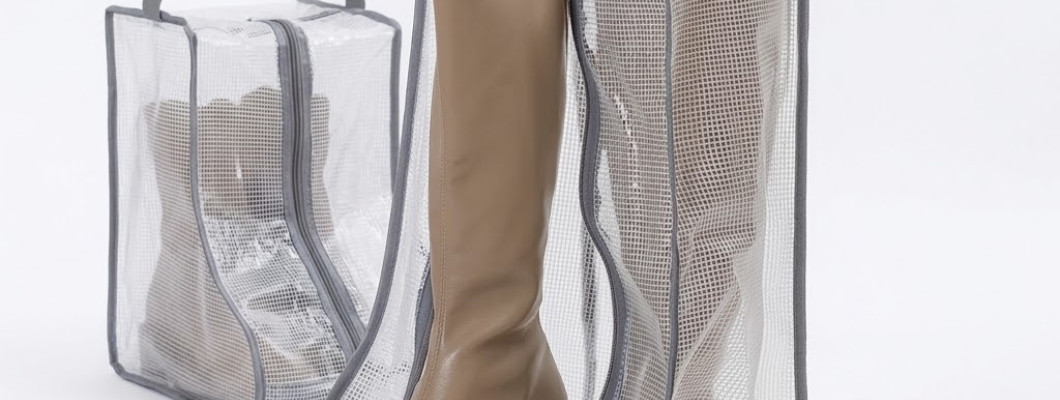
How to Store Tall Boots: Choosing a Storage Bag That Fits Your Footwear and Wardrobe
Tall boots can be awkward to put away. A shelf may accommodate the sole but leave insufficient height for the shaft. A small shoe pouch may close only if the upper section is folded, while an open wardrobe space leaves the footwear exposed to dust.
The right storage arrangement begins with the complete shape of the boot. Shaft height, shaft width, sole length and heel shape all affect the space required. A labelled shoe size does not describe those dimensions.
A dedicated boot bag can provide an enclosed, identifiable place for suitable footwear. However, it should not be expected to replace internal shape support, solve damp storage conditions or protect against every pressure inside luggage.
This guide explains how to measure your boots, evaluate a storage bag and organise home storage or travel without forcing the fit.
Quick Answer: What Is a Practical Way to Store Tall Boots?
Prepare the footwear according to its care instructions and let it dry completely. Measure from the bottom of the sole to the top of the shaft, then check the sole length and the widest parts of the boot.
Choose a bag that allows insertion and closure without pressure or forced folding. Store it in a dry location where surrounding objects do not crush the footwear.
If the shaft needs support, follow the footwear manufacturer’s guidance. An external cover is not automatically a boot shaper or a rigid protective case.
Contents
Understand what makes tall footwear different.
Separate covering, shape support and impact protection.
Measure the complete boot.
Interpret external bag dimensions.
Review the K&M Shopping storage bag.
Prepare footwear and test the fit.
Choose a wardrobe location.
Plan seasonal storage and travel.
Follow care instructions and a checklist.
Read ten frequently asked questions.
Start with the Storage Problem You Actually Have
Tall footwear can create several different problems. The shaft may collapse, the wardrobe may be too short, or the boots may be difficult to identify among other belongings.
A cover can help with separation and dust exposure. It does not necessarily address the other issues.
Before choosing a bag, decide what needs improving. Do you need a defined storage position, enough vertical clearance, a way to identify the contents or an appropriate method of supporting the boot’s shape?
Some situations require more than one measure. Matching the solution to the problem is more useful than assuming that any product labelled “boot storage” provides every kind of protection.
Treat the Boot as More Than a Shoe Size
Two boots with the same labelled size can occupy very different amounts of space. One may have a narrow shaft and slim sole; another may have a broad upper section, thick tread or a projecting heel.
Decorative details and buckles can also affect the usable arrangement. They should not be pressed against the zipper merely to make the bag close.
Assess the actual footwear you intend to store. A successful fit with another pair does not establish compatibility.
This matters particularly when buying for seasonal footwear you have not recently handled. Bring it out, inspect it and measure it before deciding on the storage dimensions.
Separate Three Types of Protection
An enclosed bag helps keep footwear apart from clothing and reduces exposure to dust. Internal support, when appropriate for the boots, addresses the shape of the shaft. A rigid protective case serves a different purpose again.
Do not expect the bag to make a flexible shaft stand upright by itself. If the footwear needs a support, follow the manufacturer’s recommendations and account for that support when assessing fit.
Likewise, a transparent panel and carrying handle do not establish impact resistance. The placement of surrounding belongings still matters.
Understanding these distinctions prevents a useful organiser from being relied on for functions it has not been confirmed to perform.
Measure the Full Height
Place the boot in its intended storage position and measure from the lowest part of the sole to the highest point of the shaft.
Include the heel and sole thickness in the overall measurement. Do not begin at the ankle or measure only the upper section.
If the shaft has an uneven top, identify the highest point requiring clearance. Where an appropriate support is used, measure the boot in that supported condition.
Do not fold the shaft simply to produce a smaller number. The measurement should describe the space the footwear needs, not the space you hope it will accept.
Check the Base and the Widest Section
Measure the sole from front to back, then check its widest point. Also examine whether the shaft is wider than the base.
Account for buckles, raised details and other projections. A measurement taken across a narrow part can overlook the section that actually limits fit.
If you intend to store more than one individual boot inside the bag, assess that complete arrangement. Measuring one item does not prove that a pair can be accommodated.
The goal is enough room for insertion, resting and closure without forcing the footwear against the sides. All three stages matter.
Interpret the 45 × 28 × 18 cm Dimensions Correctly
The K&M Shopping bag has published external dimensions of 45 cm high, 28 cm long and 18 cm wide.
External measurements are not a guarantee of identical usable internal space. Seams, edges, the zipper opening and the footwear’s shape can affect the fit.
Your boot measurements should be smaller than the stated dimensions, but that comparison is still a preliminary check rather than a universal guarantee.
If the footwear is close to the limits, ask the store about internal clearance before purchasing. Avoid inventing a fixed allowance that supposedly works for every shaft, sole and heel shape.
What the K&M Shopping Boot Bag Offers
The Tall Boot Storage Bag has a transparent front panel, a front zipper and a top carrying handle. It is intended for compatible tall footwear in home storage or during travel when sufficient luggage space is available.
The description states resistance to dust and light moisture. That does not establish full waterproofing, suitability for immersion or protection during heavy rain.
Review the product here:
https://k-m.store/en/tall-boot-storage-bag-dustproof-portable-shoe-organizer
The order includes one storage bag. The listing does not confirm a fixed capacity in boots or pairs, an exact material, a numerical carrying limit or internal shaft supports.
Prepare the Footwear Before Enclosing It
Inspect the soles, sides and shaft. Remove visible dirt using the method appropriate to the footwear’s material and finish.
Do not apply one cleaning method to every boot. Follow the care guidance for the particular footwear rather than selecting a cleaner based only on its appearance.
Allow the boots to dry completely before storage. The bag is not a drying device or a way to make damp footwear suitable for enclosed storage.
Check the boot’s own zipper, laces and buckles too. Arrange them appropriately without unnecessary tension, and address damaged or sharp parts before inserting the footwear.
Test Insertion Without Force
Open the front zipper as intended and guide the boot inside gently. Avoid pulling hard on the shaft or pushing protruding parts against the opening.
Check how the base rests and whether the upper section has enough clearance. The shaft should not be forced into a bend because the available height is insufficient.
Look at the position of the heel and any buckles relative to the transparent panel and zipper. Then attempt closure without squeezing the contents.
If resistance appears, stop. Repositioning may resolve it, but the bag may simply be the wrong size for that footwear.
Test Removal as Well as Closure
After closing the bag, reopen it and remove the boot. This reveals whether the arrangement is practical for repeated use.
A bag that requires difficult twisting every time may not be a useful match, even if it can technically contain the footwear.
Consider access in the intended storage location as well. You need enough room to reach the zipper and handle the contents without repeatedly moving unrelated objects.
For frequently worn boots, easy retrieval matters every week. For seasonal storage, access still matters because you need to inspect the footwear and bag when appropriate.
Choose the Storage Position Before Filling the Wardrobe
Measure the shelf or storage area, including the clearance needed to remove the bag. A boot can fit the bag while the filled bag does not fit the wardrobe.
Choose a dry location and keep the surrounding arrangement manageable. A cover does not repair a damp storage environment.
Avoid placing heavy belongings on top or tightly wedging the bag between other items. The external bag should not be treated as structural support for a stack.
A useful position remains available after the rest of the wardrobe is arranged. It should not depend on a temporary empty space that disappears during ordinary use.
Make the Clear Panel Useful
Face the transparent section towards a visible direction where practical. This can help you identify the footwear without opening several bags.
If multiple boots look similar, combine visibility with a consistent storage arrangement or an appropriate identifying note. A glimpse of colour may not distinguish every item.
The panel is for identification, not a complete condition check. It cannot reveal every part of the sole or the inside of the shaft.
Open the bag and inspect the footwear when needed rather than assuming that a tidy exterior confirms everything inside remains ready for use.
Frequent-Use Example
Suppose you wear the boots several times during the week. Give the bag a known location, but do not make returning the footwear to it an automatic step immediately after removal.
Check whether the boots need cleaning or drying first. Keep them in an appropriate place for that care rather than enclosing them prematurely.
Once ready, return them gently and close the zipper. This creates a clear distinction between footwear prepared for storage and footwear still awaiting attention.
The routine does not need to be elaborate. Its value comes from checking condition before covering it, rather than hiding every state inside the same closed bag.
End-of-Season Example
Before putting seasonal boots away, review their condition and care requirements. Address visible dirt or damage appropriately rather than postponing every task until the next season.
Prepare the bag too. Check that it is clean, dry and free from damage affecting the zipper, edges or handle.
Choose a position where the boots will not be compressed by later additions to the wardrobe. Record or remember that location as part of your storage system.
Bring the footwear out early enough before its next intended use to inspect it. Waiting until the morning of an event leaves less time to respond to anything requiring care.
Moving Boots Between Locations
The top handle is intended to make carrying and moving the bag easier. Prepare the footwear, check the closure and use the handle appropriately.
Do not add unrelated contents on the assumption that the handle can carry any additional weight. No numerical load capacity is stated.
Also avoid assuming that a carrying handle is intended for permanent loaded hanging. Those are different uses unless the product instructions confirm both.
During transport, choose a position away from water and unsuitable pressure. The bag provides a separate place for the footwear, not a substitute for securing luggage or protecting it against strong impacts.
Packing the Bag Inside Travel Luggage
The listing includes separating footwear from clothes during travel when sufficient luggage space is available. Test this with the other essential contents, not an empty suitcase.
Check the suitcase’s usable shape and the position of its lid or closure. Do not sharply fold the boot shaft simply to make the luggage shut.
For a broader explanation of separating footwear and planning its position, read:
https://k-m.store/en/pack-shoes-suitcase-travel-shoe-bag-guide
If the complete arrangement needs force, reconsider the contents or transport method. The storage bag does not reduce the boot’s dimensions or make surrounding pressure harmless.
Plan the Return Journey
Boots that were clean at departure may need attention after use. Allow time to inspect them before repacking rather than assuming the cover will isolate mud or moisture.
New purchases may also change the luggage arrangement. Recheck the available space instead of squeezing the bag back into its original position.
If you change which footwear you wear during travel, account for the resulting packed contents. The return layout may need to differ from the outward one.
Check actual luggage weight when necessary. Organisation does not reduce footwear weight, and a tidy suitcase does not establish that it meets the requirements of your journey.
Inspect After Returning Home
Take the footwear out and inspect the bag’s interior before moving it directly into long-term storage. Dirt, moisture or unrelated items may have entered during travel.
Care for the boots according to their instructions and clean the bag using its permitted method. Both should be ready before being enclosed again.
If the bag will now hold different footwear, repeat the fit assessment. A taller shaft or wider sole may need another arrangement.
Treat the return-home check as the link between travel and wardrobe storage. Closing the zipper at the end of the trip is not, by itself, a complete preparation routine.
Care for the Storage Bag
The product page recommends gently removing dust with a soft dry or slightly damp cloth, then allowing the bag to air-dry.
Full washing and machine washing are not confirmed. Do not immerse it or assume that a cleaning method suitable for another organiser applies.
Inspect the zipper, edges and handle before use, especially after transport. If the zipper catches, check for an obstruction or pressure from the boot instead of pulling harder.
The exact material is unspecified, so avoid choosing a specialised cleaner for an assumed fabric. Heat resistance and particular sanitising methods are also not established.
Avoid Common Boot-Storage Mistakes
Do not choose only by labelled shoe size or treat external bag dimensions as guaranteed internal capacity.
Do not assume a pair will fit because one boot does. Test the complete arrangement you intend to use.
Avoid relying on the bag to hold a flexible shaft upright, protect it from stacked luggage or isolate wet footwear from other belongings.
Finally, do not turn the handle into an unconfirmed permanent hanging point or use the bag as a protective shipping case. Dust reduction, visibility and carrying convenience do not establish every storage or transport capability.
Before-You-Store Checklist
Measure from the bottom of the sole to the top of the shaft.
Check sole length, width and upper-shaft size.
Remember that 45 × 28 × 18 cm describes external dimensions.
Confirm the intended boot or pair arrangement.
Prepare the footwear according to its care instructions.
Make sure both footwear and bag are dry.
Test insertion, closure and removal without force.
Choose a location without unsuitable pressure.
Do not assume waterproof or impact-proof protection.
Inspect the bag before transport or seasonal storage.
Quick Answers
For fit: Measure the complete boot, not only its labelled size.
For a flexible shaft: Follow the footwear’s support guidance; the bag is not a confirmed shaper.
For dust reduction: Close the zipper around prepared, dry footwear.
For moisture: Do not store wet boots or assume full waterproofing.
For travel: Test the complete luggage arrangement without forcing closure.
For care: Use gentle surface cleaning and air-drying rather than unconfirmed machine washing.
Frequently Asked Questions
1. What does a tall boot storage bag do?
It provides a separate enclosed space for compatible footwear and helps reduce dust exposure. A clear panel aids identification, while the handle assists carrying.
2. What are this bag’s dimensions?
The stated external dimensions are 45 cm high, 28 cm long and 18 cm wide. Ask about internal clearance if your footwear is close to those limits.
3. Will it fit every type of tall boot?
No universal fit is established. Shaft height and width, sole dimensions, heel shape and projecting details all influence compatibility.
4. Does it hold a complete pair?
A guaranteed capacity in individual boots or pairs is not stated. Check the complete intended arrangement rather than assuming that both will fit.
5. Will it prevent the shaft from bending?
Internal shaft supports are not confirmed. Allow suitable space and follow the footwear manufacturer’s guidance on maintaining shape when support is needed.
6. Is the bag waterproof?
Full waterproofing is not confirmed. The listing refers to light moisture resistance, not immersion, heavy rain or storing wet footwear.
7. Can you identify the boots without opening it?
Yes, the clear front panel helps identify the contents. It does not replace removing the footwear for a complete condition check.
8. Can it be carried by the top handle?
The handle is a listed carrying feature. No maximum load is published, and carrying should not be confused with unconfirmed long-term loaded hanging.
9. Is machine washing allowed?
Machine washing and full washing are not confirmed. Follow the stated gentle surface-cleaning method and allow the bag to dry.
10. Can it be used for storage and travel?
Both uses are listed when the footwear and available space are suitable. During travel, do not rely on it as rigid protection against pressure or strong impacts.
Begin with a Complete Fit Trial
Choose the actual footwear, take its measurements and check compatibility before relying on the bag. Test insertion, closure and removal, then assess the intended wardrobe or luggage position.
If something does not work, identify the specific problem: insufficient height, a wide shaft or an overcrowded storage area. Do not use the zipper to compensate for a mismatch.
Review the product here:
https://k-m.store/en/tall-boot-storage-bag-dustproof-portable-shoe-organizer
For other products available from K&M Shopping, visit:
Practical boot storage combines prepared footwear, a suitable cover and a location that respects its shape. Start with measurement and care, then use the bag for separation, identification and access throughout the season.
Leave a Comment