
How to Light a Closet Without Wiring: A Practical Guide to Placement and Everyday Use
How to Light a Closet Without Wiring: A Practical Guide to Placement and Everyday Use
A bedroom can feel well lit while the inside of its wardrobe remains difficult to see. Shelves interrupt the light, hanging clothes create shadows, and your own position can block the room’s main light just when you reach inside.
The same problem appears in storage cupboards: you know roughly where something belongs, but finding the right item means moving boxes or holding a phone while searching.
Adding a battery-powered light can be useful, but buying one is only the beginning. Where you put it, how you reach the switch and what you store around it determine whether it becomes helpful or inconvenient.
This guide explains how to assess a dark cupboard, test a lighting position and build a simple routine around it. The aim is to improve a specific everyday task without starting an electrical installation project.
Quick answer
To light a closet without wiring, choose a suitable battery-powered light and test it inside the cupboard with your belongings in their normal positions. Check that it illuminates the area you need, remains accessible and does not interfere with doors, drawers or clothing.
For a manually operated light, make sure you can reach the switch before you start searching. If you need automatic activation, select a product that explicitly provides that function.
Contents
Identify what you need to see
Separate lighting problems from storage problems
Choose the right operating method
Test placement before mounting
Plan for access and maintenance
Apply the method to different spaces
Avoid common setup mistakes
Use a practical checklist
Frequently asked questions
Getting started and quick summary
Identify the task before choosing the light
“Make the cupboard brighter” is a useful starting point, but it is too broad to guide placement.
Instead, describe the task that currently feels difficult. Perhaps you cannot distinguish between similar dark shirts. Perhaps the labels on storage boxes disappear into shadow. Or perhaps you can see the front shelf but not the items behind it.
Choose one task to solve first. This gives you a clear way to judge the result: can you now identify and retrieve the item without using your phone for additional light?
A successful setup does not need to illuminate every unused corner. It needs to support the activity that matters.
Look at the cupboard under normal conditions
Inspect the space at the time you usually use it. A wardrobe that looks bright in afternoon daylight may be harder to navigate early in the morning.
Open the door to its normal position and stand where you would ordinarily stand. Keep the usual room lighting on or off according to your routine.
Notice whether changing your position improves visibility. If stepping aside makes a major difference, your body may be blocking the main light. A local light placed inside the cupboard could address that particular problem.
Separate darkness from overcrowding
Extra light will not make an overfilled shelf easy to use.
Before installing anything, move rarely used items away from the front and group similar belongings together. Turn labels toward the opening. Leave enough space to remove a box without disturbing everything beside it.
Then reassess visibility. You may discover that the main difficulty was a tall container blocking the view rather than a lack of light across the entire cupboard.
Organisation and lighting work together. Improving access first helps you avoid buying several lights to compensate for a layout that still needs attention.
Understand what “without wiring” means
A battery-powered solution avoids the need to run a cable from a nearby outlet. It still needs a power source and a way to keep that source ready.
Think about your expected use. Opening a wardrobe briefly to select clothing creates a different requirement from spending a long time working at a desk.
Do not choose solely because a lamp is small or easy to move. Consider whether its operating method fits the task and whether you are comfortable checking and replacing batteries when needed.
For prolonged work or a large area, compare options designed for that purpose rather than assuming a small cupboard light will be sufficient.
Choose manual or automatic operation deliberately
Manual operation can suit a cupboard you open occasionally and use while standing directly in front of it. You switch the light on, find what you need and switch it off before leaving.
It becomes less convenient if the switch is behind stored items or you normally approach with both hands occupied.
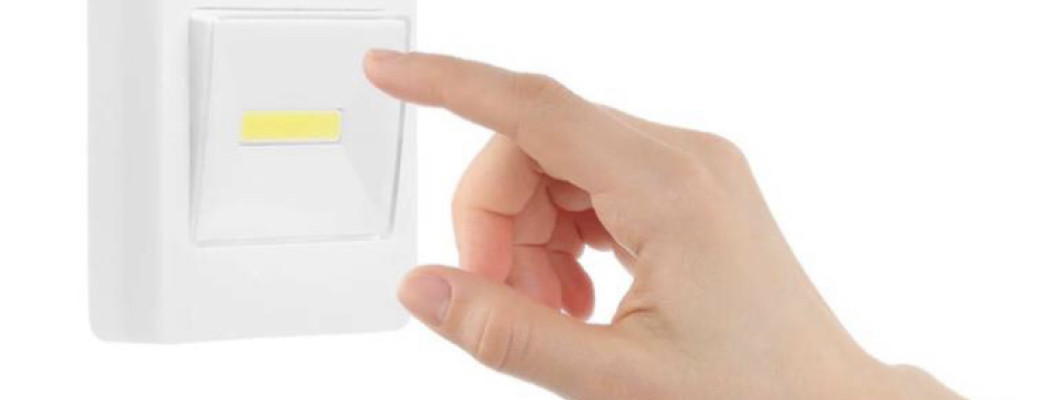
Automatic lighting serves a different routine, but you should check the actual activation method rather than relying on appearance or a product photograph. A light shaped like a wall switch does not necessarily detect motion, darkness or an opening door.
Choose the function first, then plan the location around it.
A portable option from K&M Shopping
The Portable LED Battery Powered Light listed by K&M Shopping uses manual press operation and three AAA batteries, which are not included. The page specifies a magnetic base, a rear hanging slot and dimensions of 8.6 × 8.6 × 2.5 cm.
This model does not include a motion sensor. Brightness and runtime figures are not specified, so avoid assuming a particular coverage area or battery duration.
You can review the product here:
https://k-m.store/shop/en/b45
Use the listed features to check compatibility with your intended space, then judge the lighting result through a practical placement test.
Test with the cupboard filled
An empty cupboard is easy to illuminate and can give a misleading impression of the finished setup.
Return your usual belongings before testing. Include the taller boxes, hanging garments or other objects likely to interrupt the light.
Choose an item that is normally difficult to find. Try reading its label or recognising it from your usual position. Then reach in and retrieve it.
This last action matters: a position that looks good while you stand still may create a shadow when your hand enters the cupboard. Test the whole task, not just the view.
Compare two or three positions
Try an upper position, a side position and a location closer to the opening where practical. Keep the contents and room lighting consistent while comparing them.
Look for differences in the area you actually use. Does one position help with the rear shelf? Does another reveal labels more clearly? Does your arm block the light in one arrangement?
Avoid deciding purely on symmetry. The middle of a cupboard may look tidy, but an offset position could work better around a shelf divider or a row of hanging clothes.
Choose the position that supports retrieval with the fewest obstacles.
Check your line of sight
A light aimed directly toward your face may be distracting even when it illuminates the cupboard.
Stand, bend or sit as you normally would when using the storage area. Check whether the light source dominates your view instead of helping you see the contents.
Mirrors and glossy containers can also change the experience. Look for reflections from the position where you actually search.
Try adjusting the location before abandoning the idea. A small change in where the lamp sits may help you see the stored items without placing the light directly in your line of sight.
Check every moving part
Close the cupboard door slowly during the trial. Open drawers, move hanging clothes and slide storage boxes in and out.
A location is unsuitable if the lamp collides with the door or requires you to handle every item unusually carefully.
Think about the next stage of normal use too. Will a fuller clothes rail press against it? Will a larger replacement box occupy the same space?
Choose a position with a clear boundary around it. A setup that works only while the cupboard is unusually empty is unlikely to remain convenient.
Match the mounting method to the surface
Do not assume that a metallic-looking surface will provide a secure magnetic attachment. Check the actual hold while supporting the light with your hand.
A moving door deserves particular attention. A lamp that stays in place while the door is still may behave differently during ordinary opening and closing.
If you use a hanging method, select a fixing appropriate for the surface and the lamp’s attachment point. Follow the relevant installation guidance.
The goal is not merely to keep the lamp attached once. It should remain stable during normal use, including pressing the switch and removing nearby belongings.
Leave room for maintenance
Before finalising the location, imagine the next battery change.
Can you remove the lamp easily? Can you reach its battery compartment without emptying the entire cupboard? Can you put it back in the same position afterward?
A good lighting location should not create a maintenance problem. If every check requires dismantling your storage arrangement, you may postpone it until the light stops being useful.
Keep the supplied instructions somewhere accessible. Use the marked battery orientation and the manufacturer’s guidance rather than guessing when replacing batteries or troubleshooting a lamp that does not turn on.
Example: a wardrobe used every morning
Start with the section containing the clothes or accessories you select most often.
Test whether you can identify the correct item and return it without disturbing the light. Include similar-looking items in the trial; a setup should help with the choices you genuinely make.
Place the control where it fits the sequence of opening the wardrobe, selecting clothes and closing it again.
If someone else shares the wardrobe, ask them to try it too. Differences in height and reach may reveal that a convenient position for one person is awkward for another.
Example: a household storage cupboard
In a cupboard holding spare cables, stationery or household accessories, labels may be more useful than attempting to illuminate every loose object.
Group items into manageable containers, label them clearly and test whether the lighting allows you to read the labels from outside the cupboard.
Keep frequently used containers near the front. Place the lamp where removing one container does not disturb it.
This creates a repeatable process: open, identify, retrieve and return. The light supports that process instead of becoming another loose item among the contents.
Example: a temporary or rented space
When you do not want to alter a room permanently, start by identifying a stable location that can be restored easily when you leave.
Do not assume that “no wiring” also means “no surface changes.” A hanging fixing may still require permission or leave a mark, depending on the installation.
Check what is allowed before mounting anything. If using a removable placement, make sure pressing the switch does not cause the lamp to slide or tip.
A temporary solution should still be predictable and secure during everyday use.
Create a home for a portable light
Portability is useful, but a lamp that moves around constantly can become difficult to find.
Decide whether the light belongs to one cupboard or serves several occasional tasks. If it is shared, choose a return location and make that location familiar to everyone who uses it.
Avoid leaving it on whichever narrow shelf or table edge happens to be nearby.
For occasional backup use, accessibility matters as much as portability. Keep the lamp somewhere known and unobstructed, while remembering that a small auxiliary light is not a substitute for required emergency-lighting arrangements.
Recognise when another solution is needed
If you still struggle to see the task clearly after testing sensible positions, reconsider the type of lighting rather than repeatedly moving the same lamp.
A broad room, extended reading session or detailed work task may need a different design.
Likewise, choose appropriately specified equipment for locations exposed to moisture or other demanding conditions. Do not infer environmental protection from the appearance of a plastic housing.
There is no benefit in forcing one small light to cover every situation. A useful trial helps you recognise both where it works and where your requirements are different.
Common mistakes
Several setup mistakes are easy to avoid:
Mounting the light before testing with normal contents.
Placing it behind a tall box or hanging garment.
Choosing appearance over visibility.
Forgetting to check door and drawer clearance.
Hiding the switch behind frequently moved belongings.
Treating an unspecified runtime as a guaranteed duration.
Buying several units before testing one location.
Ignoring access for battery changes.
Most of these problems come from evaluating the lamp separately from the cupboard. Treat the light, storage layout and user’s movements as one practical setup.
Build a small daily habit
For manual lighting, connect switching off with the end of the task.
For example, make the sequence “return the item, switch off, close the door.” A consistent sequence is easier to follow than hoping you notice the light later.
Keep the area immediately around the lamp clear. When adding a new box or garment, check that it has not blocked the beam or control.
If several people use the cupboard, explain the arrangement once. A setup that depends on only one person understanding it is less likely to remain useful.
Review the setup as storage changes
During your usual weekly tidy, check visibility, access and stability. You do not need an elaborate inspection routine.
If the result seems worse, first look for changes in the cupboard. A new container may explain the shadow.
After a seasonal reorganisation, repeat the original placement test. Different clothing or storage boxes may make another position more suitable.
Follow the product’s instructions for care and extended storage, and check the lamp before bringing it back into regular use.
Placement checklist
Identify one task that needs better visibility.
Organise the relevant shelf first.
Test with ordinary contents in place.
Compare more than one position.
Check shadows while reaching inside.
Check reflections from your normal viewing position.
Confirm door and drawer clearance.
Verify secure placement.
Keep the control accessible.
Allow access for maintenance.
Quick answers
Best location: the one that makes your actual task easier without obstructing storage or movement.
Best time to test: under the lighting conditions in which you normally use the cupboard.
First response to a new shadow: check whether the contents or your position have changed.
Reason to choose another model: the required operating method, coverage or environment does not match the current light.
Useful measure of success: you can identify and retrieve belongings without adding awkward steps.
Frequently asked questions
Can I light a closet without installing electrical wiring?
Yes, a suitable battery-powered light can provide local illumination. Test the arrangement with your normal belongings and confirm that the controls and mounting position work for daily use.
Does the B45 light switch on when the closet door opens?
No. The listed model uses manual press operation. Choose a product with an explicitly stated automatic activation feature if that is essential.
Should I mount a closet light above or beside the shelf?
Test both where practical. Shelf dividers, hanging clothes and your reaching position affect the result. There is no single location that suits every cupboard.
Will a magnetic light attach securely to every metal surface?
No. Check compatibility and holding strength on the actual surface before relying on it, including during normal movement and switch operation.
Are batteries included with this K&M light?
No. The product requires three AAA batteries purchased separately. Check the compartment markings and supplied instructions when installing them.
How long will the batteries last?
The listing does not provide a verified runtime. Do not plan around an invented duration; monitor performance under your own usage conditions.
Why does my hand block the light?
Your hand may be passing between the source and the item. Try another position and repeat the retrieval task before settling on the installation.
Can one small lamp illuminate my entire wardrobe?
That depends on the layout and your expectations. Test the sections you need to use rather than assuming complete coverage from the lamp’s size or appearance.
What if the switch becomes difficult to reach?
Reposition the lamp or nearby belongings. Convenient operation is part of a successful setup, not an optional detail.
How do I know whether I need another light?
First check placement and organisation. If separate areas still need illumination after a fair trial, assess those areas individually before adding equipment.
Step by step: getting started
Choose one cupboard and one difficult task. Organise that section, prepare the lamp according to its instructions and compare suitable positions.
Test visibility while retrieving an item. Check clearance, stability, control access and maintenance access. Then use the arrangement during your normal routine.
Change one factor at a time if improvement is needed. This makes it easier to understand what helped.
Conclusion
Useful closet lighting begins with the way you use the space. A well-chosen position can matter as much as the lamp itself.
Start small, test honestly and keep the setup easy to operate. The right result is a cupboard that becomes simpler to use every day.
Quick summary
Define the task, organise the shelf and test before mounting. Keep the light accessible, check moving parts and revisit placement when storage changes. Choose features from verified specifications rather than assumptions.
Read also
For organising belongings before a trip, explore the travel packing guide:
https://k-m.store/shop/en/blog/travel-packing-guide-en
For home accessories and other practical products, visit K&M Shopping:
https://k-m.store/
Leave a Comment