
Under-Bed Clothes Storage: How to Choose a Bag, Check the Fit and Keep Clothing Easy to Find
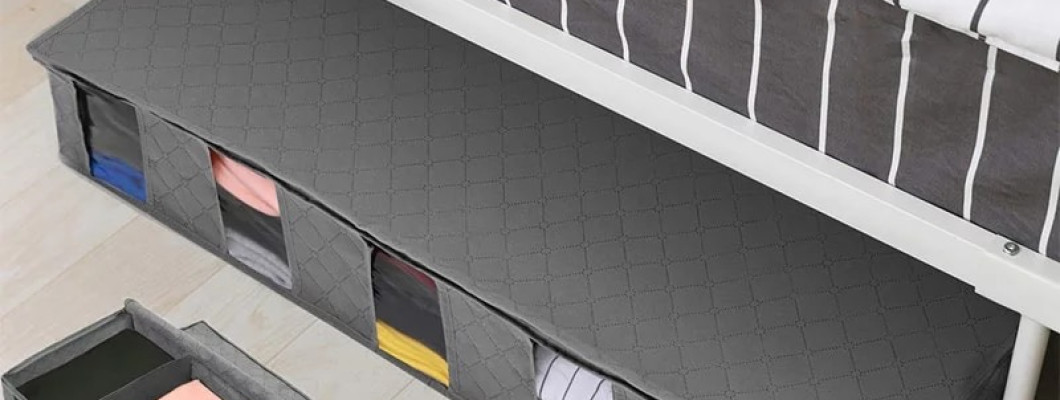
Under-Bed Clothes Storage: How to Choose a Bag, Check the Fit and Keep Clothing Easy to Find
A wardrobe can feel full even when it contains relatively few clothes you wear regularly. Spare bedding occupies a shelf, seasonal clothing fills another, and everyday items end up squeezed into the remaining space. Meanwhile, the area beneath the bed may be empty or filled with loose bags whose contents are difficult to identify.
Under-bed storage can help separate occasional items from the clothing you need now. However, buying a bag is only part of the solution. You also need to check the available space, decide what belongs there and create a simple arrangement that remains understandable after several weeks.
A useful storage system lets you retrieve one group without unpacking everything else. It also leaves enough access to clean the floor, inspect the contents and return items without forcing a closure.
This guide explains how to assess your bedroom, choose an under-bed clothes storage bag and organise clothing around your actual routine.
What is the best way to store clothes under a bed?
Use a suitably sized storage bag in a clean, dry and accessible space. Group clean, completely dry clothing by type, person or season, and pack it so the closure works comfortably. Check that the filled bag can move through the opening and that you have somewhere to pull it out and open it.
Keep frequently needed clothing elsewhere if accessing the bag is awkward. The best arrangement is one you can maintain without repeatedly moving furniture or emptying unrelated sections.
Start with the wardrobe problem you want to solve
Before measuring the bed, identify which contents are making your wardrobe difficult to use. Perhaps you cannot reach everyday shirts because spare linen sits in front of them. Alternatively, clothing for another season may be taking up the shelf you need for current outfits.
Choose one problem first. Moving a clearly defined category is easier to manage than transferring a random selection of everything that looks untidy.
Sort the proposed contents into items to keep accessible, items suitable for occasional storage and items needing a decision. Clothing awaiting repair or a decision about whether to keep it should not disappear into long-term storage without a plan.
This initial sorting also prevents unnecessary purchases. You may discover that one organised group needs a bag, while several other pieces can leave the wardrobe altogether.
Decide whether under-bed storage suits your routine
The space beneath a bed is most useful when its accessibility matches how often you need the contents. Seasonal clothes and spare household textiles may be reasonable candidates. Items used every morning require easier access.
Consider the physical steps involved. Will you need to move a bedside table? Is there enough room to kneel or sit comfortably while opening the bag? Can another person retrieve their belongings without your help?
An arrangement that works during a careful weekend tidy may become frustrating on a busy weekday. Try the movement you expect to repeat, rather than judging the space only by appearance.
The surrounding conditions matter too. Investigate dampness or water reaching the area before storing textiles there. A storage organiser should not be expected to solve a problem with the room itself.
Measure the opening, the interior and the exit route
Begin with the clearance between the floor and the lowest part of the bed at the intended entry point. The visible height of the legs does not necessarily represent the usable opening.
Look farther underneath. A central support, crossbar or lower frame component may interrupt the space after the bag has passed the edge.
Next, measure the usable width and depth between obstacles. The mattress dimensions tell you little about the individual spaces formed by legs and supports below it.
If the bag will sit on a rug, measure from the rug surface. Check whether it must cross a raised edge while being pulled out.
Finally, allow practical movement space. A bag that only just matches an opening may be difficult to use once filled. Avoid planning around squeezing or pressing the contents down every time you store it.
Remember the space outside the bed
A bag needs somewhere to go when you retrieve it. A narrow gap between the bed and wardrobe may allow partial movement without providing enough room to open the cover.
Identify a clear area where you can access the contents. You should be able to remove a folded item and return it without balancing other clothing on nearby furniture.
Use a tape measure to visualise the proposed footprint on the floor. Paper laid out to approximate the shape can also help you notice conflicts with a door, bedside unit or regular walking route.
Think about the direction of access before filling anything. The most convenient orientation is usually the one that makes identification, pulling and opening straightforward from the side you actually use.
The K66 under-bed clothes storage bag
The K66 bag from K&M Shopping has listed dimensions of 92 cm long, 32 cm wide and 14 cm high. It includes internal divisions, clear front viewing windows, a double-zippered upper cover and handles for pulling and light carrying.
Its long, low shape is worth comparing with your measurements when you want to organise folded clothing beneath a bed.
The listing does not specify the material or a maximum load. Do not treat it as a rigid stacking box or assume confirmed waterproof performance.
You can review the product details and photographs here:
Use those details alongside your room measurements and the actual garments you intend to store. A photograph cannot establish how your particular bedding or folded clothing will fit.
Choose a grouping method you can remember
There are three useful starting points: clothing type, owner and season. Choose the one that best matches the way you look for things.
Grouping by type works when you usually search for a category, such as casual tops, nightwear or spare pillowcases. You can review one group without disturbing the others.
Grouping by owner is helpful in shared bedrooms. Each person knows where to return their belongings, even when garments look similar.
Grouping by season works when you expect to bring most of the contents back into use together. However, keep transitional pieces accessible if you still wear them between seasons.
Combining two methods can work well. For example, use one bag for seasonal clothing and divide that clothing by person. Avoid creating more categories than your household can comfortably remember.
Prepare clothing before it enters storage
Check the care instructions for garments that need particular handling. Folding is not automatically appropriate for every fabric or garment shape.
Make sure the clothing is ready to wear before packing it away. Empty pockets, remove forgotten tissues and set aside anything needing repair. Finding an unresolved problem months later is rarely convenient.
Allow recently washed or steamed clothing to become completely dry before storage. Pay attention to thicker areas rather than judging only the outer surface.
Try folding one representative item from each category. A lightweight top, a pair of trousers and a pillowcase may need different approaches to fit neatly.
The aim is not to achieve identical-looking folds. It is to create manageable groups that fit without crowding and remain recognisable when the bag is opened.
Test a small load before filling every section
Start with one modest group. Close the bag and check the intended route beneath the bed before committing all your clothing to it.
Notice where movement becomes awkward. The problem may be the room layout, an obstruction or the way the contents have been distributed.
Then practise retrieving a particular item. Can you locate it without dismantling several groups? Can you put it back without pressing down hard on neighbouring clothes?
Adjust the arrangement while the load is still small. A change to folding or grouping is much easier now than after several categories have been packed together.
Leave some flexibility rather than treating every empty space as a problem. Clothes may return from laundry folded slightly differently, and a system that depends on a perfect fit can be difficult to maintain.
A seasonal clothing example
Imagine that lighter clothing occupies most of a wardrobe shelf while you have started wearing warmer layers. Instead of moving the entire shelf into storage, separate the clothes according to what you still need.
Keep transitional items accessible. Put the genuinely seasonal pieces into the storage group, and deal separately with anything that no longer fits or needs attention.
Within the seasonal group, organise by the way you expect to retrieve it. Keeping casual clothing together and occasion clothing separately may be more useful than sorting purely by colour.
Make a short note of any items deliberately left in the wardrobe. This prevents later confusion about whether a set is incomplete.
When the season changes again, review the stored clothing before returning everything automatically. Your size, preferences or routine may have changed since it was packed.
A shared-bedroom example
Shared storage works best when ownership and return locations are obvious. Otherwise, one person may understand the arrangement while everyone else uses the nearest available space.
Agree on a simple division before packing. Each person should know which area contains their clothing and whether any section is shared.
Decide what happens when one category outgrows its space. Review that group instead of quietly moving items into somebody else’s section.
Avoid overly detailed instructions that require constant explanation. A short label or note should be enough to identify the main contents.
It also helps to agree on where the bag will be opened. Keeping this area available makes it easier for each person to retrieve clothing independently and return the storage to its usual place.
Organising spare bedding without scattering the sets
Spare bedding can be easier to retrieve when pieces are grouped by the bed they belong to. Consider whether keeping a matching set together would simplify your next linen change.
Before choosing this method, check how the folded set fits. Different fabrics and sizes create different amounts of bulk, so one successful example does not establish capacity for every set.
If you prefer sorting pillowcases and sheets separately, use clear categories and keep matching information easy to understand.
Do not add unrelated clothing to every remaining gap merely because space is available. Those small additions are easily forgotten and make a previously clear grouping harder to maintain.
For especially bulky pieces, assess a storage option suited to their dimensions and care requirements instead of forcing them into your existing arrangement.
Make identification useful, not complicated
Labels are most helpful when they tell you what you need to know at a glance. “Spare linen for the main bedroom” is often more useful than a long list that becomes outdated after one change.
For clothing, a category, owner or season may be sufficient. Add detail only where similar groups would otherwise be confusing.
If you keep a note on your phone, make it brief and easy to update. There is little benefit in a precise inventory that nobody maintains.
Change the description when you change the contents. An old label can be more misleading than no label at all.
Before buying another garment or bedding item, check the relevant stored group. Knowing what you already own is one of the practical benefits of keeping categories understandable.
Build a return habit
Storage often becomes disorganised when items come back, rather than when they are first packed. A garment is removed easily, washed, and then placed in whichever section has room.
Return each item to its defined group. If that group no longer fits comfortably, review the contents or folding instead of spreading the category across unrelated spaces.
When several items are temporarily out, leave their allocation understandable. You do not need to fill the space immediately with something else.
This is particularly useful when exchanging seasonal wardrobes gradually. Keep track of which groups are still active and which are ready for storage.
A good system tolerates ordinary use. It should not require a complete rearrangement whenever one pair of trousers returns from the laundry.
Keep cleaning access part of the plan
Under-bed storage should remain movable enough for normal room care. If retrieving it becomes a major project, dust and forgotten objects can accumulate around it unnoticed.
When cleaning the area, check the floor and the route used to move the bag. Remove small objects that could catch or obstruct it.
Allow cleaned flooring to dry before returning stored textiles. If you notice unusual dampness or an odour, inspect the contents and investigate the source.
Follow the organiser’s own care guidance rather than assuming it can be washed like clothing. Inspect any care label supplied with the item before choosing a cleaning method.
Keep storage bags out of children’s play activities. Their purpose is organising belongings, and the room arrangement should allow adults to manage access appropriately.
Review the system when the room changes
Moving a bedside cabinet or adding a rug can change an arrangement that previously worked. Recheck access after furniture changes instead of assuming the original measurements still apply.
The same applies when you change the contents. A category of lightweight clothing may behave differently from a group of thicker garments.
Use a simple review: pull the bag out, find one item, return it and put the bag away. Notice any stage that now requires unnecessary effort.
If the arrangement has become inconvenient, change the location or contents before buying another organiser. More storage products will not correct an awkward access route.
Reviewing small changes promptly helps prevent a gradual return to loose piles and mixed bags.
Common mistakes to avoid
Buying several organisers before testing one can leave you with a layout that looks suitable on paper but is difficult to use around bed supports.
Another mistake is storing undecided clothing indefinitely. Separate the decision about keeping an item from the decision about where it belongs.
Avoid mixing shoes, cables, paperwork and clothing simply because they fit into an empty corner. Different categories are usually easier to manage in storage suited to their needs.
Do not use a closure as a way to compress an overloaded arrangement. Reduce or redistribute the contents when closing becomes difficult.
Finally, avoid making the system depend on one person’s memory. A clear grouping method should remain understandable to anyone who needs to use it.
A final check before putting everything away
Confirm the opening, internal space and retrieval route. Check that the clothing is ready for storage, the floor is suitable and each group has a clear purpose.
Practise opening the bag and finding one specific item. Return it, close the bag and move it back into position without forcing any stage.
Make sure the room still works normally around the storage. Doors should open, walking routes should remain usable and cleaning access should be practical.
Only then decide whether another organiser would solve a separate need. Let the successful trial guide the next purchase.
Frequently asked questions
1. Can I store everyday clothes under the bed?
Yes, if access is genuinely convenient. If you must move furniture or unpack several groups every morning, keep everyday items in a more accessible wardrobe area and use under-bed space for less frequent needs.
2. How much clearance should I leave?
Compare the organiser’s dimensions with the lowest points along its complete route, then allow room for comfortable movement. A height measurement alone does not account for supports, uneven filling or a rug edge.
3. Should I fold or roll the clothing?
Choose according to the garment’s care needs and the available space. Test a few items before committing. The useful method is the one that allows identification, retrieval and comfortable closure without excessive crowding.
4. Is one large bag better than several smaller ones?
Neither arrangement is automatically better. Consider the categories, available openings and retrieval space. Separate bags can suit independent groups, while one larger organiser may be easier for a category you move together.
5. Can clothing go into storage immediately after ironing?
Let it cool and become completely dry, particularly after steam ironing. Check thicker areas and follow the garment’s care instructions before folding and closing it inside storage.
6. Will storing clothes neatly prevent all creases?
No. Fabric, folding, pressure and storage duration can all affect creasing. Choose a suitable storage method for delicate garments, and avoid expecting tightly packed clothing to emerge ready to wear without attention.
7. What if I cannot remember where a particular item went?
Simplify the grouping and add a short, accurate description. Avoid distributing one category across several places without a reason. Update your note whenever you move a meaningful part of the contents.
8. Should I store shoes with folded clothes?
Separate them in suitable storage, after cleaning and drying them as appropriate. Keeping footwear distinct makes both categories easier to inspect and prevents loose shoes from mixing with clothing.
9. When should I check stored clothing?
Review it when seasons, sizes or household needs change, and when cleaning or rearranging the room. Also investigate promptly if you notice dampness, an unusual smell or difficulty accessing the contents.
10. What should I do if the arrangement becomes too full?
Review what belongs there, remove unnecessary items and adjust the grouping. Do not automatically add another bag. First identify whether the problem is excess contents, an unsuitable category or a difficult layout.
Start with one useful category
Choose a group that is taking up valuable wardrobe space, measure its proposed storage location and test a manageable load. Keep the arrangement simple enough to understand after you have been away from it for a while.
Explore home organisation options at K&M Shopping:
Successful under-bed clothes storage gives occasional belongings a clear home while leaving everyday clothing easier to reach. Its value comes from being able to find, use and return what you own without starting the whole sorting process again.
Leave a Comment